Drainage-Engineered Artificial Grass for Houston Properties
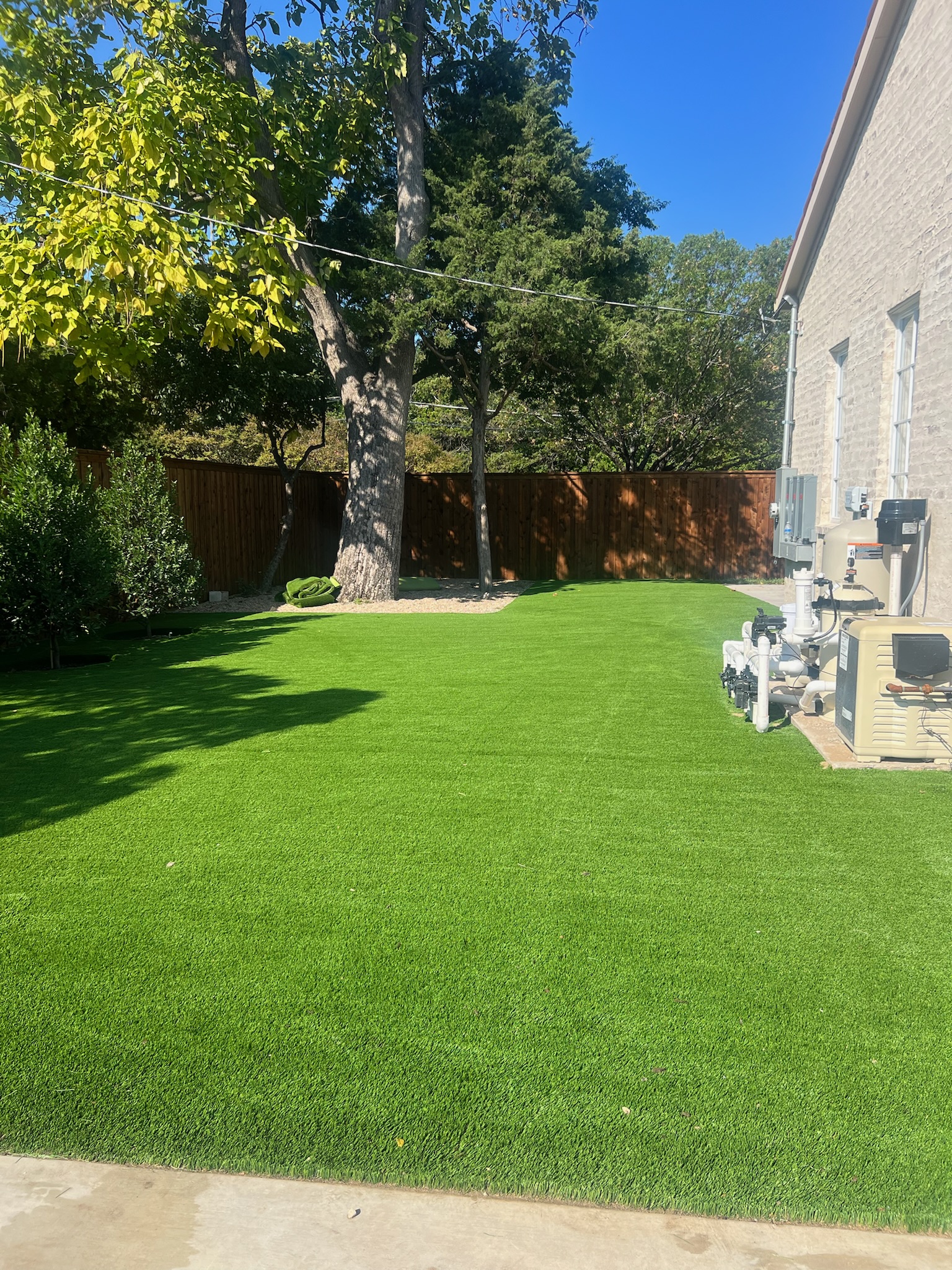
Houston presents a landscaping environment unlike anywhere else in the country. Torrential Gulf Coast rainstorms can dump several inches of water in a matter of hours, saturating clay-heavy soils that drain poorly and leave yards waterlogged for days. That standing water breeds mosquitoes, promotes fungal disease in natural grass, and turns outdoor spaces into unusable mud pits. Tour Greens Houston has developed artificial grass installation methods specifically engineered to handle the unique hydrology of Greater Houston, channeling rainwater through the turf surface and into properly graded sub-bases so your yard is ready to use within minutes of even the heaviest downpour.
Our team serves homeowners and commercial property managers throughout Harris County and the surrounding communities, delivering synthetic turf solutions that thrive in Houston's subtropical humidity without the mold, mildew, and pest problems that plague traditional lawns. From backyard retreats in River Oaks and Memorial to sprawling commercial landscapes in the Energy Corridor and Galleria area, we bring decades of combined turf installation experience to every project. Call Tour Greens Houston at 713-538-2718 to arrange a complimentary site assessment and discover how artificial grass can transform your Houston property.
Residential Artificial Grass Solutions
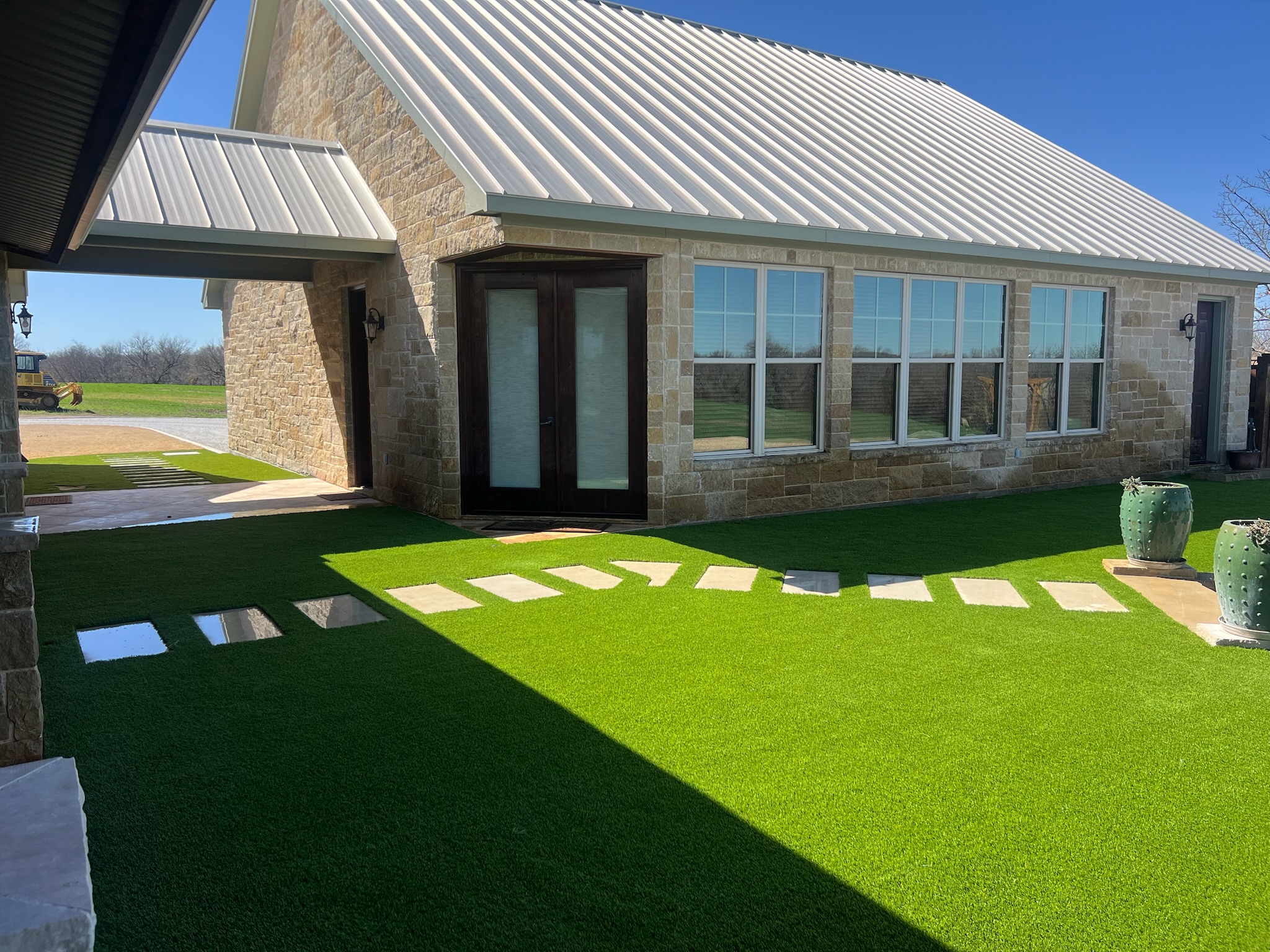
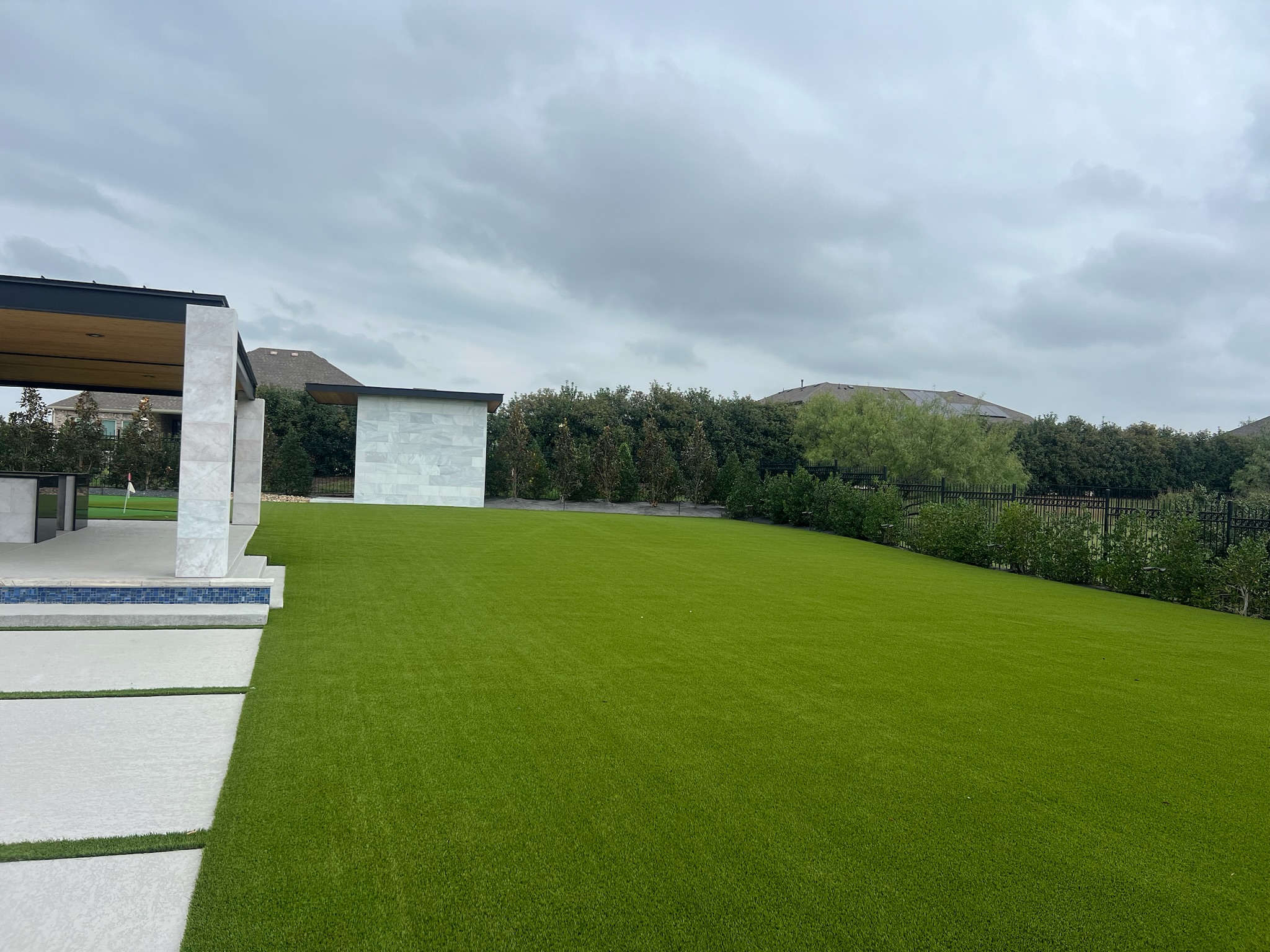
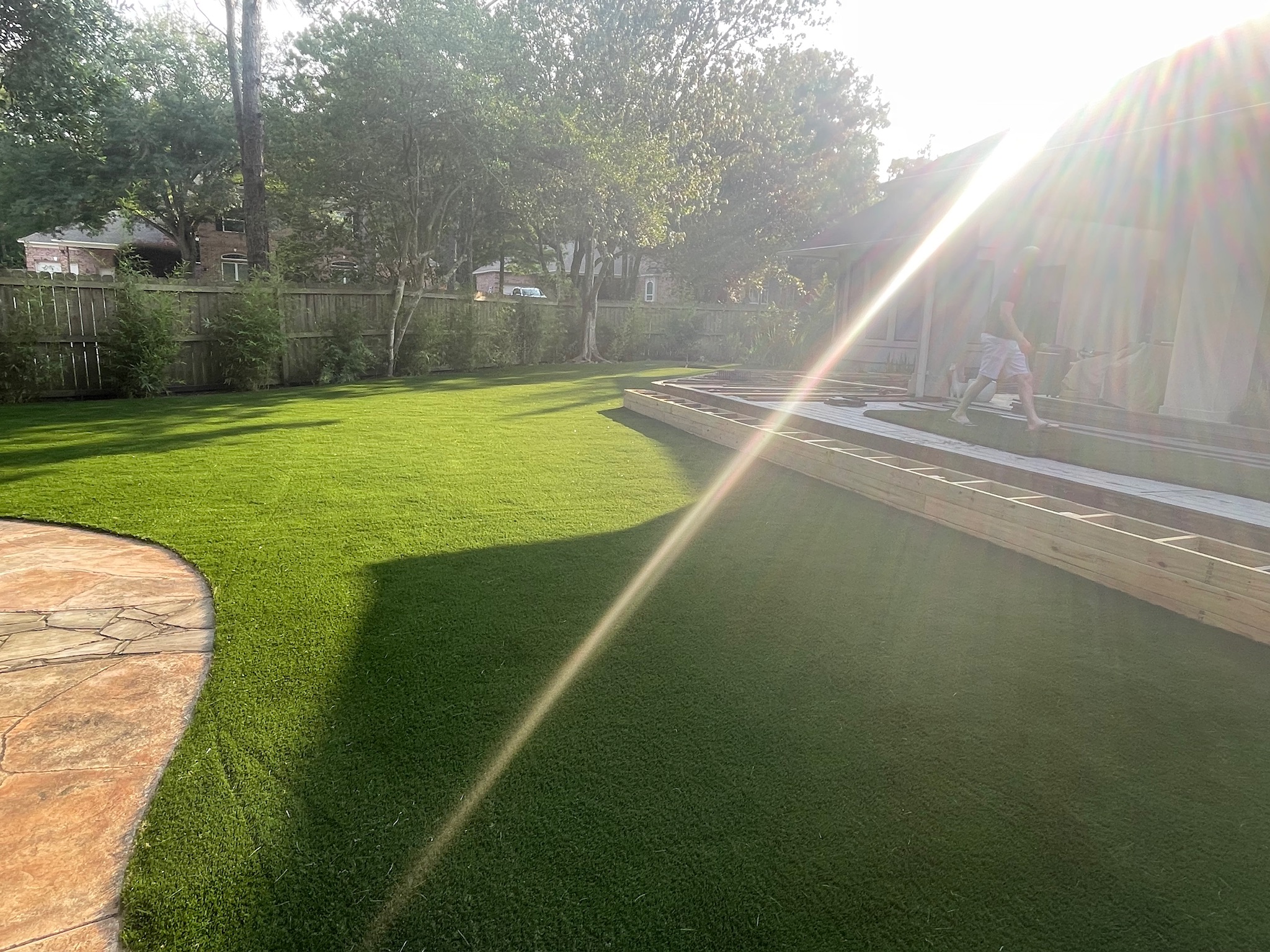
Houston homeowners invest significant time and money trying to maintain natural lawns that face relentless pressure from humidity-driven fungal infections, chinch bug infestations, and soil compaction caused by the region's heavy clay composition. Synthetic turf from Tour Greens Houston eliminates every one of those headaches while providing a consistently beautiful landscape that never needs mowing, edging, or chemical treatments. Our residential installations transform front yards, backyards, courtyards, and rooftop terraces into maintenance-free green spaces that look immaculate regardless of the season or weather conditions.
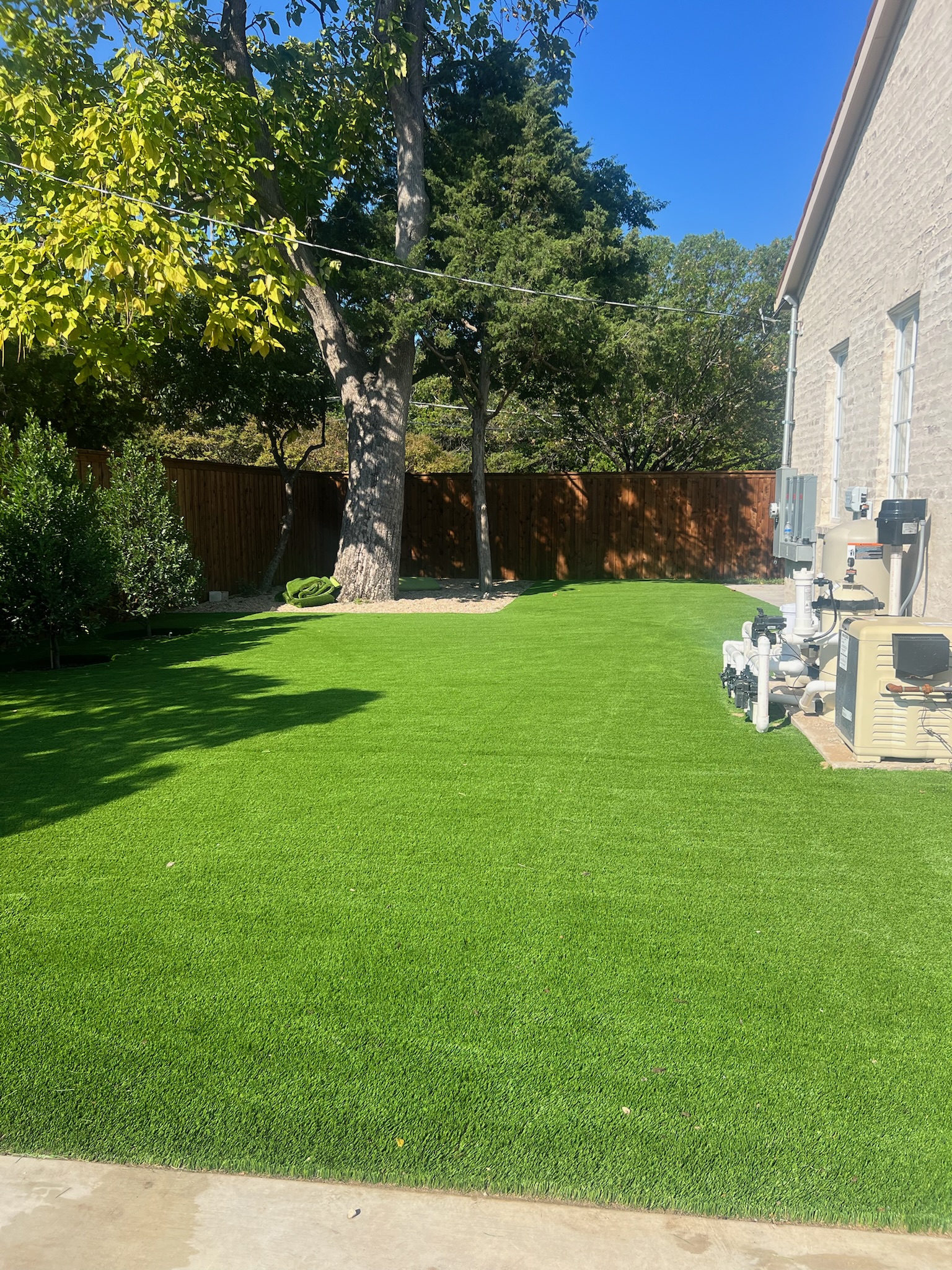
Families across Greater Houston choose our turf for children's play zones because the cushioned surface stays clean, drains instantly after rain, and eliminates the mud and allergens that natural grass tracks indoors. We design custom pet areas using antimicrobial turf fibers and rapid-drainage infill systems that prevent odor buildup even in Houston's sweltering summer humidity. Pool surrounds are another specialty, where our non-slip synthetic grass replaces slippery tile and scalding concrete with a comfortable, quick-drying surface that complements tropical-style landscaping with palms, bird of paradise, and ornamental grasses planted in adjacent beds. Shaded side yards and areas beneath towering live oaks where St. Augustine grass thins and dies finally become lush, usable extensions of your living space.
Commercial and Athletic Turf Solutions
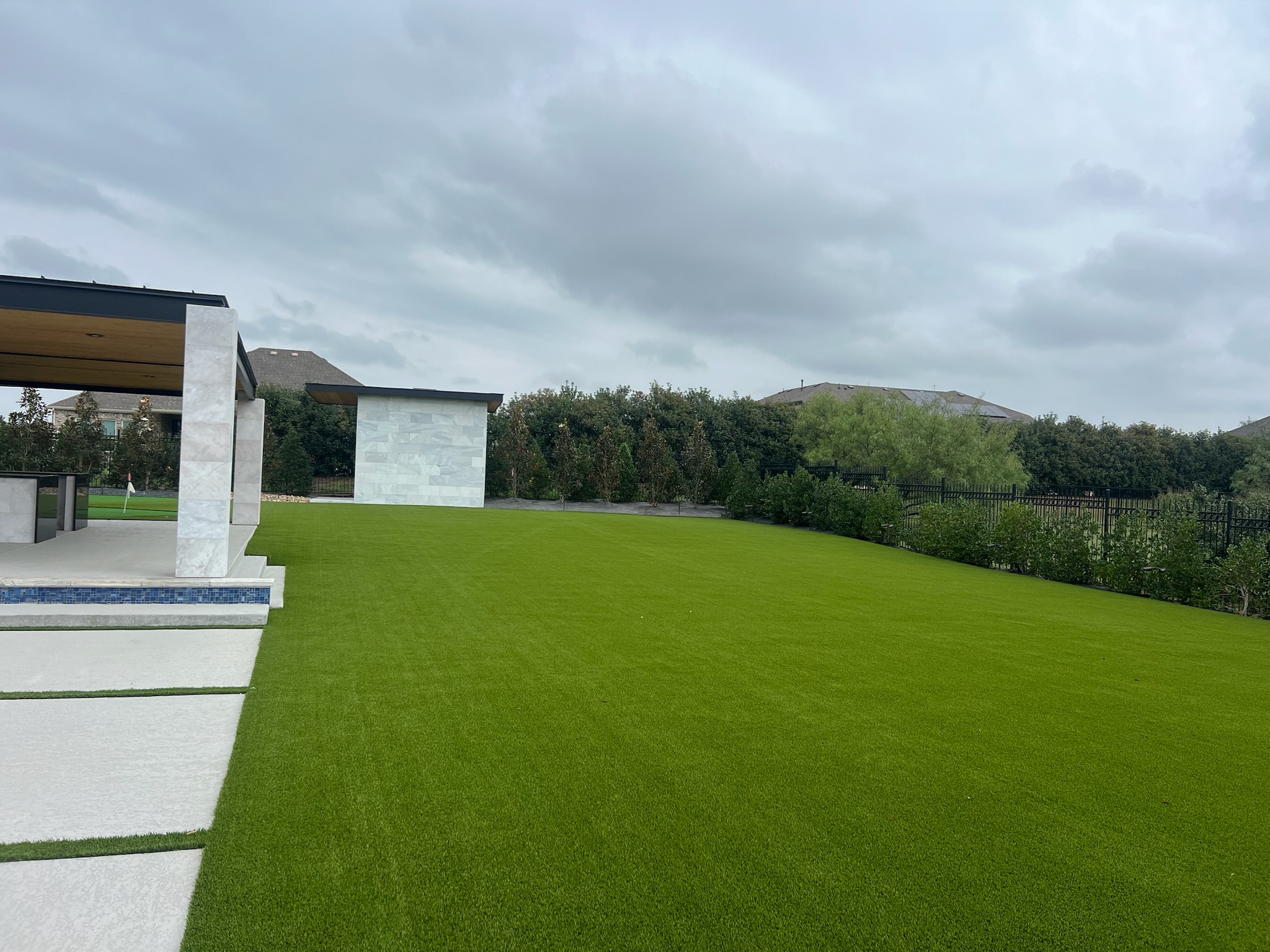
Commercial property managers in the Houston market understand that curb appeal directly impacts tenant retention, lease rates, and foot traffic. Maintaining natural grass on office campuses, retail plazas, and multifamily developments in Greater Houston requires year-round mowing, irrigation system upkeep, seasonal overseeding, and constant pest management. Tour Greens Houston replaces those recurring expenses with a single installation that delivers flawless green landscaping for 15 to 20 years with minimal upkeep. Properties along the Katy Freeway, in the Texas Medical Center district, and throughout the Westchase area already benefit from our commercial turf solutions.
We also engineer high-performance athletic surfaces for Houston's extensive sports and recreation market. Indoor soccer arenas, baseball and softball training centers, CrossFit boxes, and martial arts studios rely on our specialized sport turf to provide consistent traction, shock absorption, and durability under intense daily use. Our playground installations at Houston-area schools, childcare facilities, and municipal parks incorporate fall-rated padding systems that meet CPSC guidelines for critical fall heights. Rooftop amenity decks on downtown high-rises and midrise apartment complexes gain inviting green gathering spaces where residents can relax, socialize, and exercise without leaving their building.
Turf Technology Engineered for Gulf Coast Conditions
Every artificial grass product we install in Houston is selected and configured to excel in the Gulf Coast's demanding subtropical climate. Our turf fibers utilize advanced polyethylene formulations with built-in UV inhibitors that prevent color degradation despite Houston's intense solar exposure, which exceeds 2,600 hours of sunshine per year. The fibers are treated with antimicrobial agents during manufacturing to resist mold and mildew growth, a critical feature in a city where relative humidity routinely stays above 80 percent for weeks at a time.
The drainage architecture beneath our Houston installations is where our expertise truly sets us apart. We engineer layered sub-base systems using angular crushed stone and washed granite that facilitate rapid percolation even when installed over Houston's notoriously dense clay soils. Our turf backing features high-flow perforation patterns capable of draining more than 40 inches of rainfall per hour, far exceeding the intensity of the most severe Gulf Coast thunderstorms. Combined with precision grading that directs subsurface water toward existing storm drainage infrastructure, these systems ensure that your artificial grass surface sheds water efficiently and remains dry and usable year-round.
Environmental Advantages of Artificial Grass in Houston
Greater Houston's rapid population growth places increasing strain on regional water supplies drawn from Lake Houston, Lake Conroe, and the Gulf Coast Aquifer system. A standard 1,200-square-foot Houston lawn requires roughly 48,000 gallons of supplemental irrigation per year to stay green through the scorching months of July, August, and September. By switching to artificial grass, Houston homeowners and businesses can redirect that water back to the community while lowering their utility costs meaningfully every billing cycle.
Artificial turf also eliminates the need for chemical lawn treatments that are especially problematic in the Houston watershed. Fertilizer runoff from residential and commercial properties contributes to nutrient loading in Buffalo Bayou, Brays Bayou, and ultimately Galveston Bay, where algal blooms harm marine ecosystems. Removing herbicides and insecticides from your property's maintenance routine protects local waterways and creates a safer outdoor environment for children, pets, and wildlife. Additionally, ending weekly mowing eliminates the carbon emissions and particulate pollution generated by gas-powered lawn equipment, contributing to improved air quality in a metropolitan area that already contends with ozone and smog challenges.
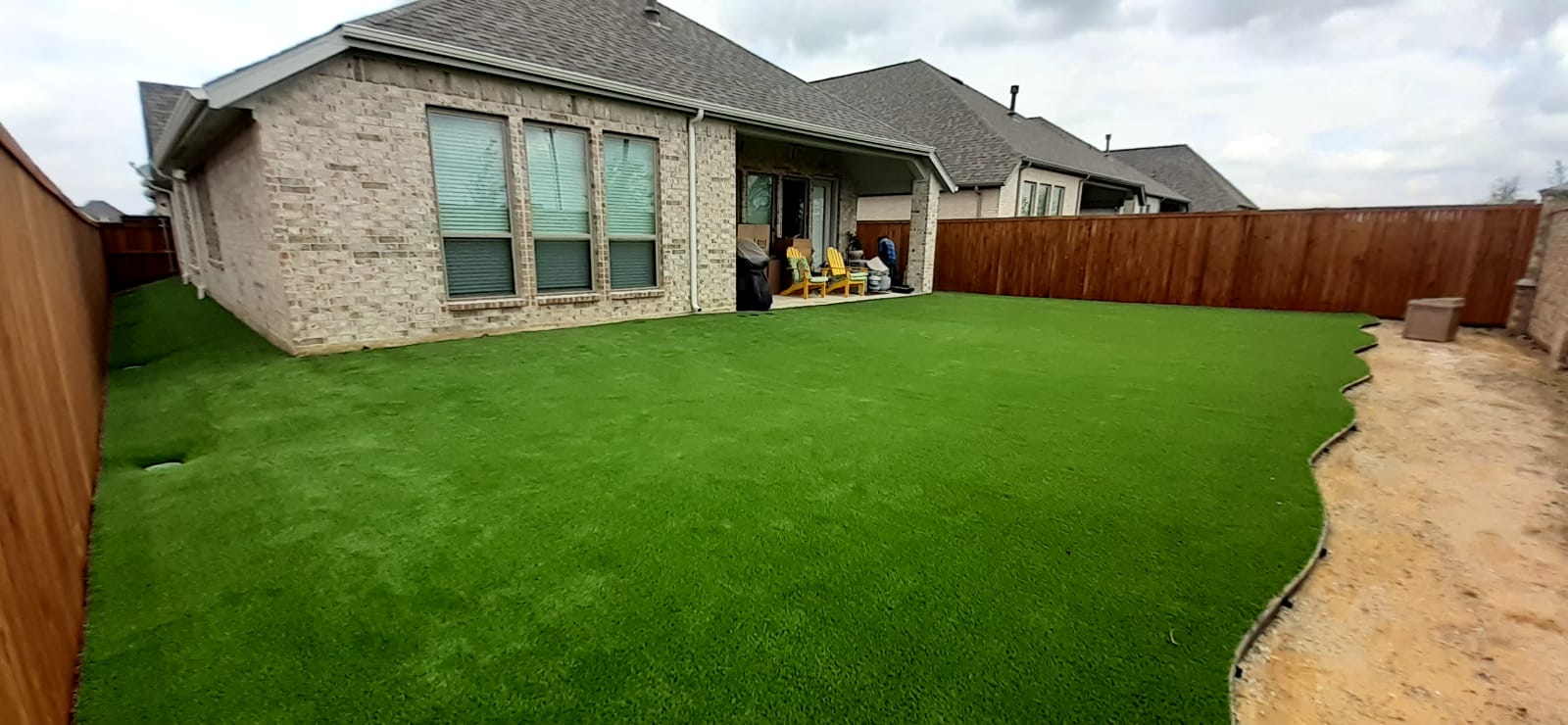
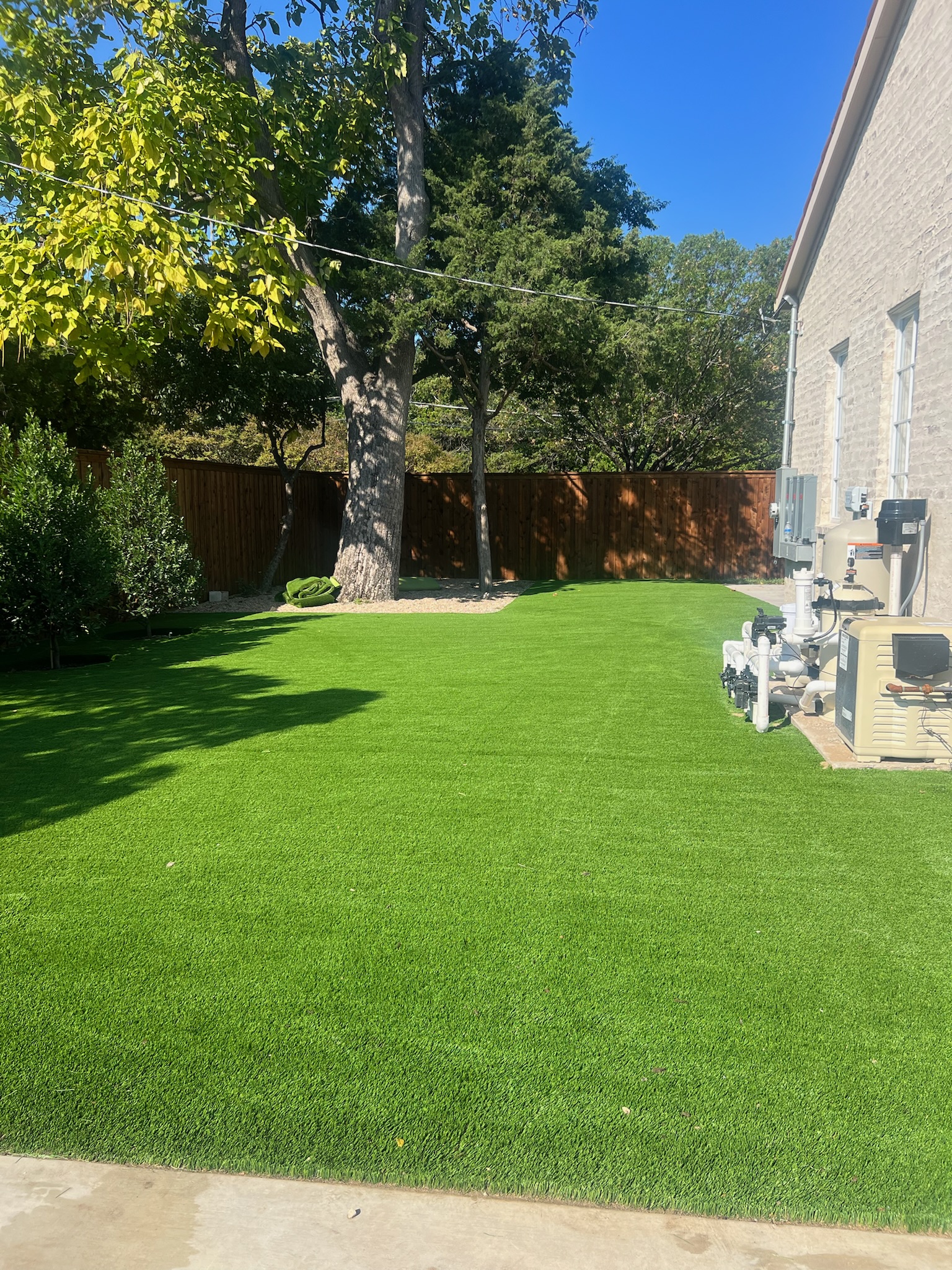
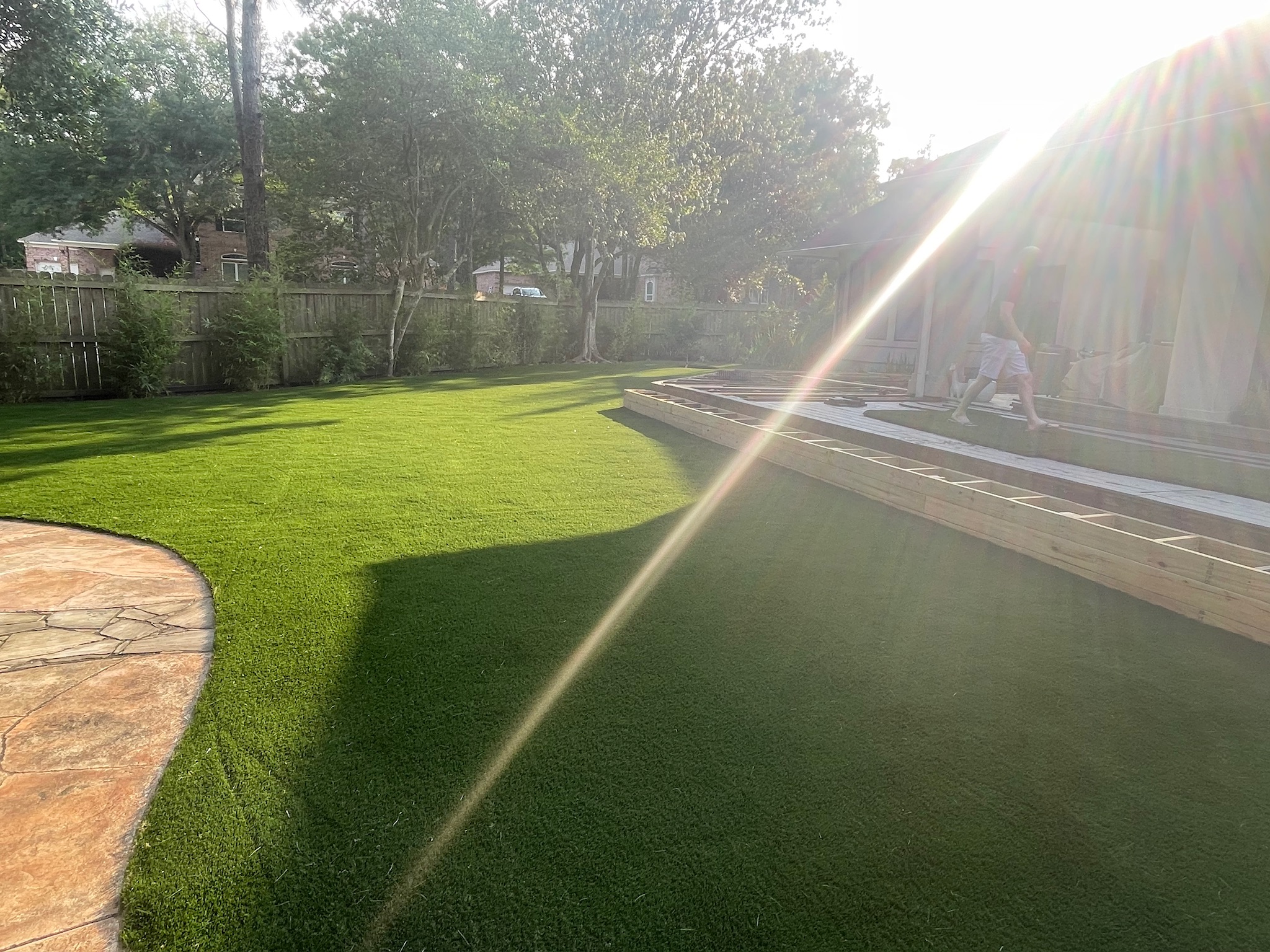
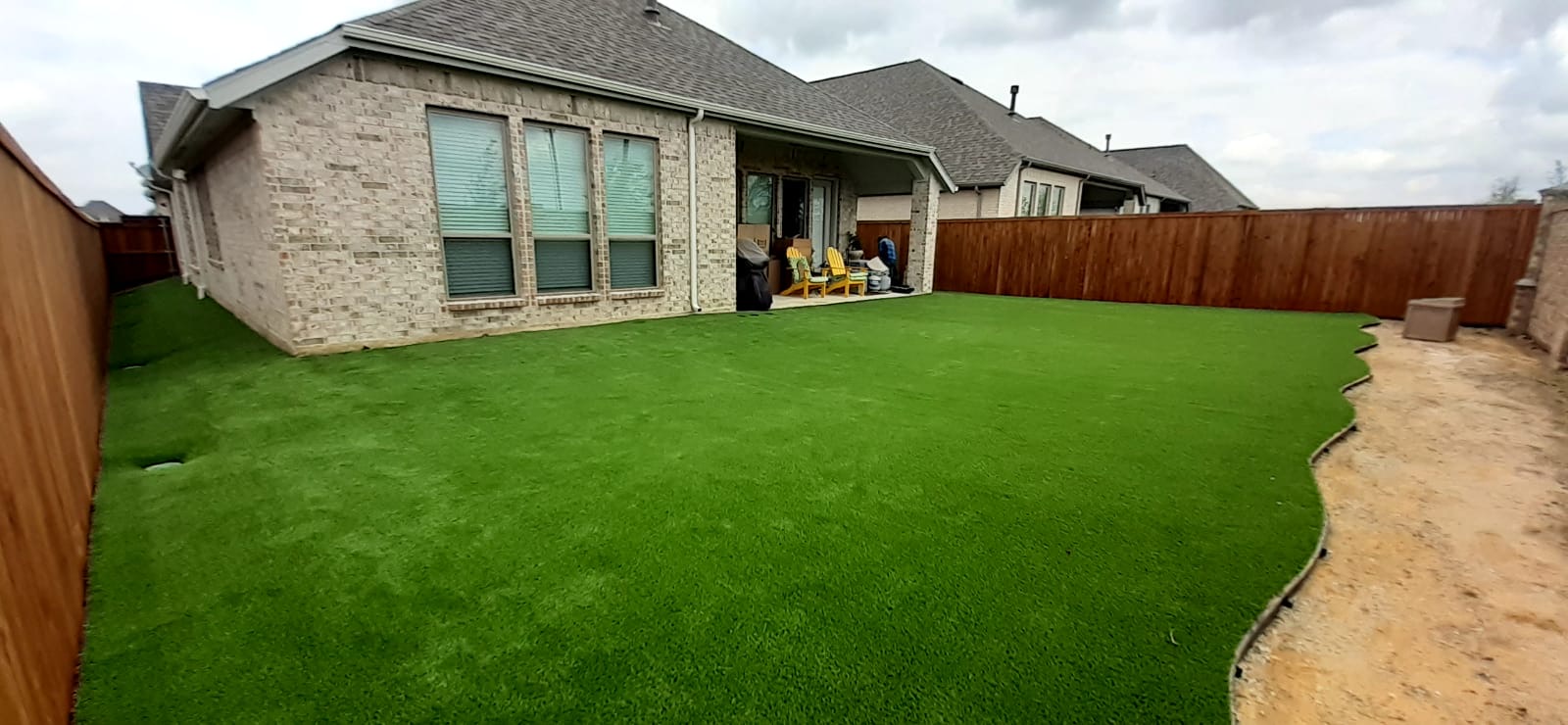
Our Work
Frequently Asked Questions About Artificial Grass in Houston
Is artificial grass suitable for Houston properties located in FEMA flood zones?
Yes, and in many respects synthetic turf actually performs better than natural grass during flood events. Our permeable turf systems allow floodwater to pass through the surface and into the ground rather than pooling on top, which reduces surface-level water accumulation around your home's foundation. After floodwaters recede, artificial grass dries quickly and does not suffer the root rot, soil erosion, or fungal diseases that devastate natural lawns following prolonged inundation. The turf fibers and backing materials are fully waterproof and will not absorb contaminated floodwater, making post-event cleanup straightforward. We recommend a thorough rinse and optional sanitizing treatment after any significant flood event to restore the surface to pristine condition.
How does artificial grass prevent mold and mildew in Houston's humidity?
Mold and mildew thrive in warm, moist environments with organic food sources, which is exactly what a traditional Houston lawn provides. Our synthetic turf removes all three conditions. The fibers themselves are inorganic polyethylene that cannot serve as a food source for fungal growth. The infill materials we select for Houston installations are specifically chosen for their resistance to moisture retention, allowing the surface to dry rapidly after rain or irrigation. Furthermore, our turf products are treated with antimicrobial coatings during the manufacturing process that actively inhibit the growth of mold, mildew, and bacteria. The combination of fast drainage, inorganic materials, and antimicrobial treatment makes our artificial grass effectively immune to the mold problems that constantly plague Houston's natural landscapes.
What is the drainage rate of your turf systems, and how does it handle Houston thunderstorms?
Our standard turf products drain at a minimum rate of 30 inches per hour through the backing perforations alone. For Houston installations, we typically specify our high-flow drainage backing that handles more than 40 inches per hour. To put that in perspective, the most intense rainfall Houston typically experiences during severe thunderstorms peaks at around 4 to 6 inches per hour. Our turf surface can process water at eight to ten times that rate, meaning standing water on the turf itself is virtually impossible under any normal weather conditions. The sub-base beneath the turf adds additional drainage capacity, with our engineered aggregate layers providing temporary water storage and controlled percolation into the underlying soil or connection to your property's existing storm drain system.
What is the return on investment for commercial artificial grass installations in Houston?
Commercial properties in Greater Houston typically recover their artificial turf investment within four to six years through eliminated maintenance costs. A mid-size commercial lawn of approximately 5,000 square feet in Houston costs between $8,000 and $15,000 per year to maintain when factoring in weekly mowing, monthly edging, quarterly fertilization, irrigation water, sprinkler system repairs, and periodic sod replacement for damaged areas. Artificial turf reduces ongoing annual maintenance costs to roughly $500 to $1,000 for occasional brushing, rinsing, and minor seam repairs. Over a 15-year product lifespan, that translates to total savings of $100,000 or more for a single property. Multi-property portfolio managers overseeing office parks, apartment communities, or retail centers multiply those savings across every site in their portfolio.
Can you install artificial grass on Houston rooftop decks and elevated surfaces?
Rooftop and elevated-surface installations are a growing segment of our Houston business, particularly for downtown high-rises, midrise apartment buildings, and commercial properties seeking to maximize underutilized overhead spaces. We use lightweight turf systems with specialized foam underlayment that adds cushion and comfort without exceeding structural load limits. Our rooftop installations include integrated drainage mats that channel water toward existing roof drains, preventing any interference with the building's waterproofing membrane. The result is a vibrant, inviting green space that transforms a bare concrete rooftop into an amenity that tenants and visitors genuinely enjoy, increasing property value and differentiation in Houston's competitive real estate market.
How does the Houston coastal climate affect your warranty coverage?
Tour Greens Houston stands behind every installation with comprehensive warranty coverage that fully accounts for Gulf Coast weather conditions. Our turf products carry manufacturer warranties of 8 to 15 years depending on the specific product line, covering UV degradation, excessive fiber loss, and backing failure under normal use. These warranties are not voided by Houston's high humidity, salt air exposure from coastal proximity, or heavy rainfall events. Our installation workmanship warranty covers seam integrity, edge stability, drainage performance, and sub-base settling for a minimum of five years. We have been installing artificial grass across Greater Houston long enough to know exactly how our products perform in this climate, and we select only those turf systems with proven track records in subtropical coastal environments.