
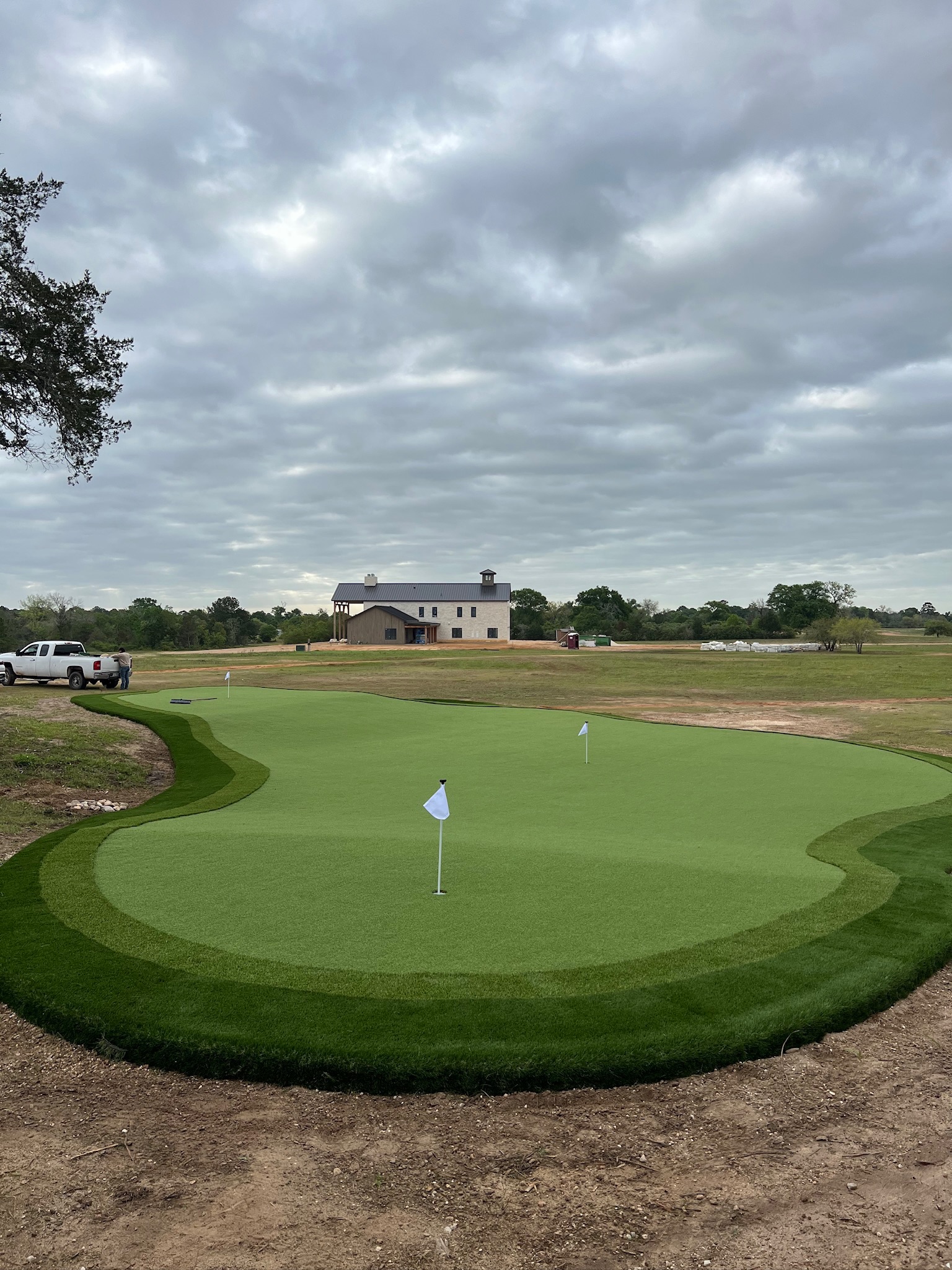
Putting Green Installation Engineered for Houston's Climate
Houston sits barely 50 feet above sea level on the Gulf Coastal Plain, where heavy clay-gumbo soil, annual rainfall exceeding 50 inches, and tropical storm surges create conditions unlike anywhere else in Texas. Tour Greens Houston builds every synthetic putting green with these realities front and center, engineering drainage-first sub-base systems, humidity-resistant materials, and compaction techniques refined specifically for Harris County soil profiles. The result is a putting surface that drains rapidly after a summer downpour, resists the expansion and contraction cycles caused by saturated Beaumont clay, and maintains a true, consistent roll from January through December.
Whether your property is in the Memorial Villages, along Buffalo Bayou, inside the Energy Corridor, or out in the newer developments of Cinco Ranch and Bridgeland, our installation crew understands the terrain. We have spent years studying how Houston's flat topography, high water tables, and relentless humidity affect synthetic turf performance, and we have developed a proprietary installation protocol that addresses every one of those challenges. When you invest in a Tour Greens Houston putting green, you receive a playing surface that performs at championship level no matter what the Gulf Coast weather delivers.
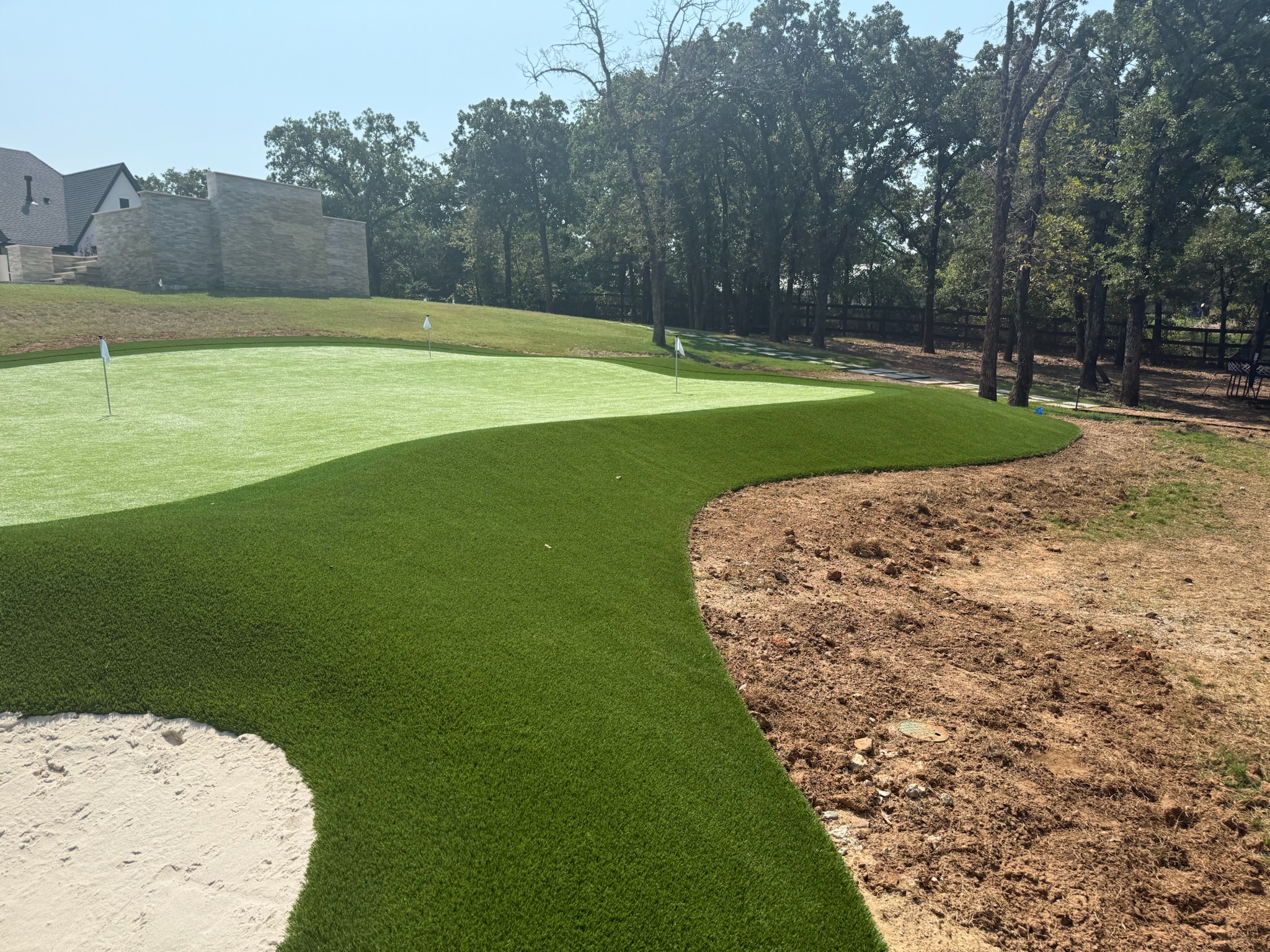
Why Houston Demands a Different Approach
In cities built on sandy loam or limestone, installing a putting green is relatively straightforward. Houston is different. The Beaumont clay formation that underlies most of Greater Houston swells when wet and shrinks when dry, creating a constant push-pull cycle that can warp a poorly installed base within a single rainy season. Add the fact that Houston averages nearly 100 days of measurable precipitation per year, and you begin to understand why drainage is not optional here -- it is the foundation of every successful installation.
Our crew begins each project by evaluating the site's natural water flow, identifying low spots where standing water could collect, and mapping the path to the nearest storm drain or dry well. Only after we have designed a drainage plan tailored to your specific lot do we move forward with excavation. This drainage-first philosophy is what separates Tour Greens Houston from general-purpose landscape contractors who treat synthetic turf as a simple overlay product.
Beyond drainage, we account for the extreme UV exposure Houston properties endure. Our turf fibers are treated with advanced UV stabilizers that prevent color fade and fiber degradation even under the intense Gulf Coast sun, where the UV index regularly reaches 10 or 11 during summer months. We also select adhesives and infill materials rated for sustained temperatures above 100 degrees Fahrenheit, ensuring seam integrity and surface consistency through the hottest stretches of August and September.
Why Choose Tour Greens Houston for Your Installation
Selecting the right installation partner matters more in Houston than in most markets. Here is what sets our team apart.
Clay Soil Expertise
Our crews have installed hundreds of greens on Beaumont and Lake Charles clay formations. We know exactly how deep to excavate, what aggregate ratios to use, and how to engineer a sub-base that resists the swell-shrink cycle unique to Houston's geology.
Flood-Rated Drainage
Houston receives more annual rainfall than Seattle, Miami, or New York. Our installations incorporate French drains, perforated pipe networks, and graded aggregate layers sized to handle the kind of sudden, heavy downpours that are standard along the Gulf Coast from May through October.
Humidity-Resistant Materials
Average relative humidity in Houston hovers around 75 percent year-round. We use antimicrobial infill, mildew-resistant backing, and adhesives formulated for tropical environments to ensure your green stays fresh and performs consistently even during the steamiest months.
Tropical Storm Readiness
From Harvey to Beryl, Houston homeowners know that severe weather is a reality. Our edge anchoring system and high-density base construction keep your green securely in place through high winds and heavy flooding events, minimizing damage and reducing post-storm recovery time.
Local Permitting Knowledge
Many Houston neighborhoods, from River Oaks to Sienna Plantation, have HOA guidelines and municipal codes governing landscape modifications. Our team handles permitting coordination and HOA submission documents so your project moves forward without delays.
Post-Installation Support
We provide comprehensive care instructions specific to the Gulf Coast climate and remain available for seasonal tune-ups, infill replenishment, and any adjustments needed after major weather events. Our relationship with you extends well beyond installation day.
The Tour Greens Houston Installation Process
Every putting green we install in Greater Houston follows a rigorous 10-step process developed specifically for the challenges of Gulf Coast soil, weather, and humidity. Here is how we transform your yard into a tour-caliber practice facility.
Step 1
Survey and Drainage Mapping
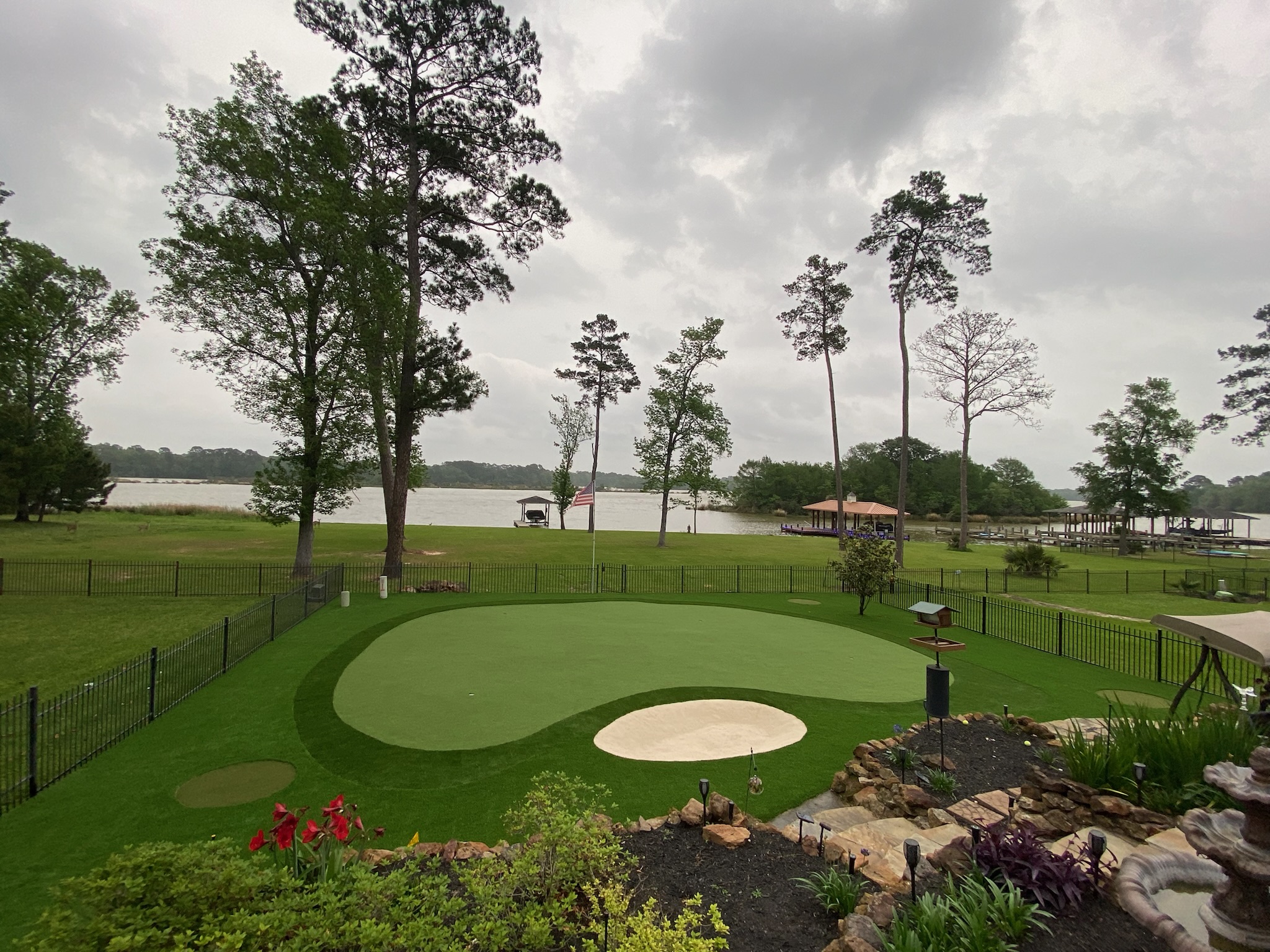
Before any dirt moves, our team conducts a thorough survey of your property. We measure the available footprint, identify existing utility lines, and -- most critically for Houston -- map the natural drainage patterns of your lot. Because the Houston metro sits on an almost entirely flat coastal plain, even a one-inch grade change matters. We use laser levels to chart water flow direction and determine where to route drainage pipes so that runoff exits the green area quickly, even during the sudden two-inch-per-hour downpours that are common from June through September.
Step 2
Excavation and Clay Removal
Houston's Beaumont clay is notoriously difficult to work with. It swells dramatically when saturated and cracks when dry, and leaving it as a sub-base beneath your putting green is a recipe for surface warping. Our excavation crew removes the clay to a depth calibrated for your specific site -- typically deeper than installations in sandier parts of Texas -- and exports the spoils off-site. We also remove existing sod, root systems, and organic material that could decompose and create voids beneath the base, then apply commercial-grade weed barrier and pre-emergent treatment to prevent future growth.
Step 3
Sub-Base Construction and Contouring
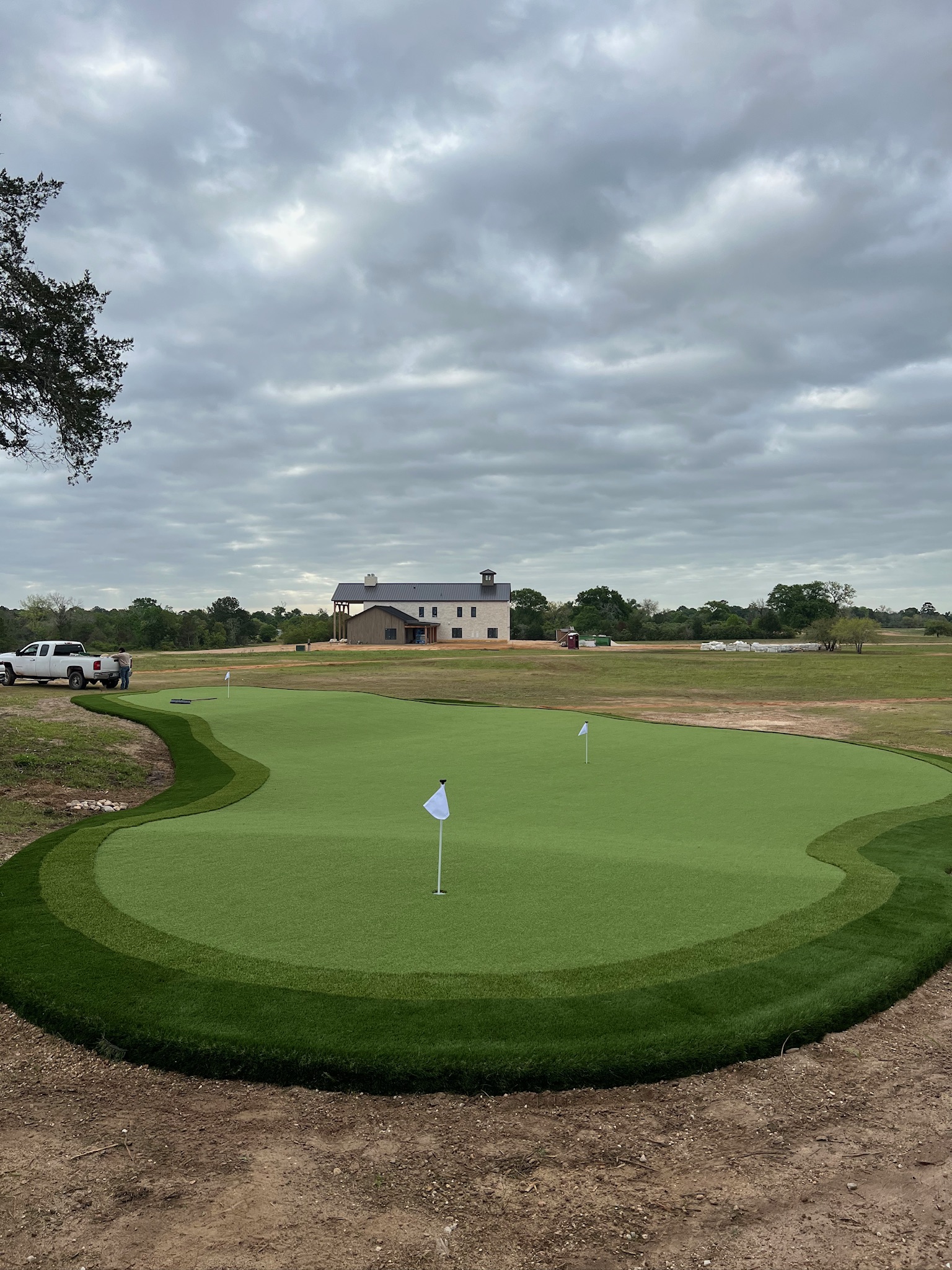
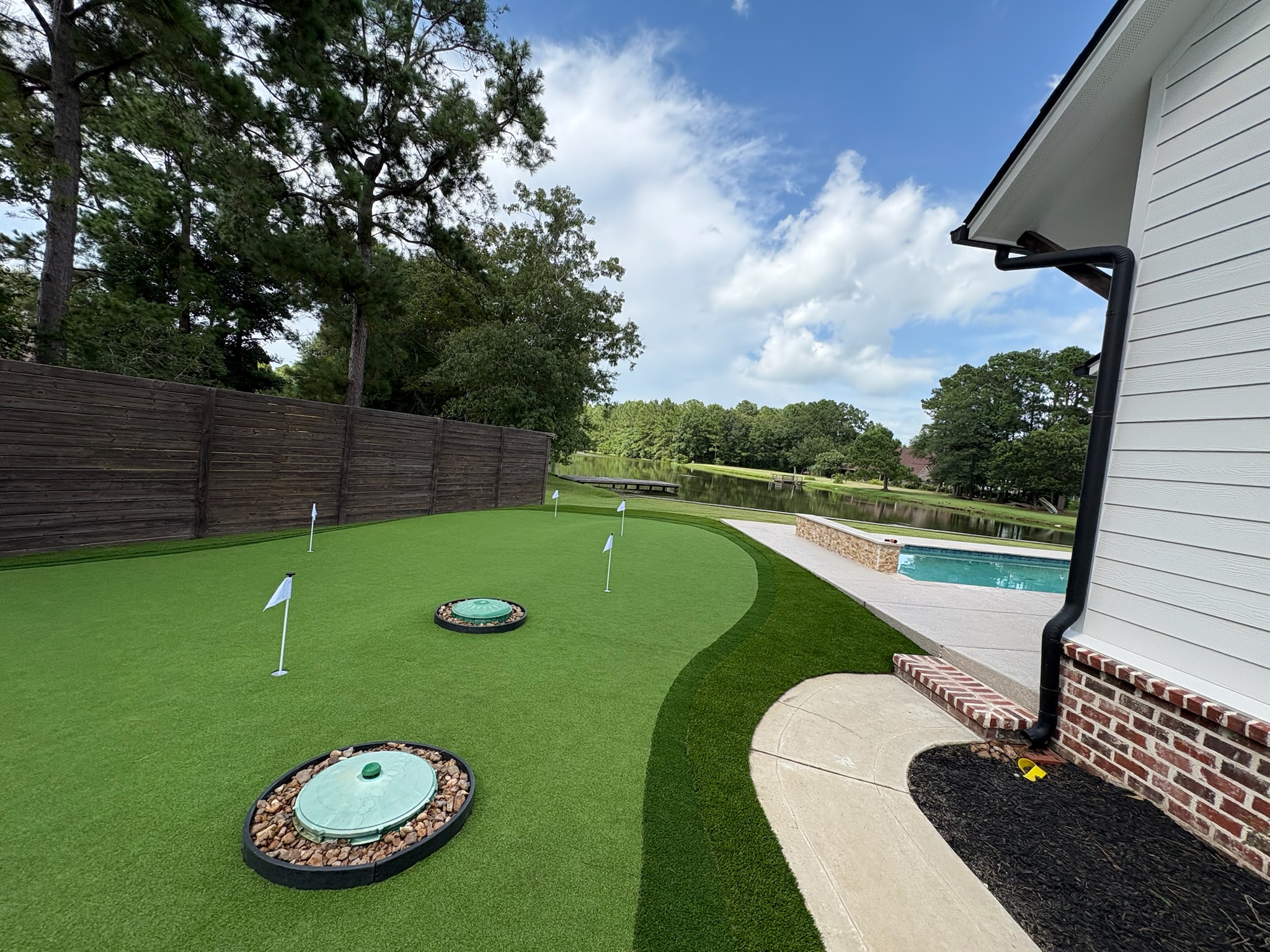
With the clay removed, we begin building the engineered sub-base that gives your green its shape, stability, and drainage capacity. We layer crushed limestone aggregate in lifts, compacting each layer with vibratory plate compactors to achieve 95 percent Proctor density. As we build up the base, we sculpt the undulations, breaks, and contours that will challenge your putting stroke. In Houston's flat terrain, these contours are entirely manufactured -- there is no natural hill to work with -- so our team pays close attention to creating realistic slope transitions that mimic the greens at courses like Champions Golf Club, Houston Oaks, and The Club at Carlton Woods.
Step 4
Install Shock Pad for Shot Reception
For greens designed to receive chip shots and approach shots, we install a closed-cell foam shock pad over the compacted aggregate. This pad absorbs ball impact energy, allowing well-struck chips to check up and stop rather than bouncing off the surface. The foam we use is rated for high-moisture environments, resisting water absorption that could cause breakdown in Houston's wet climate. The pad also adds a slightly softer feel underfoot, making the surface more comfortable during extended practice sessions on those warm Gulf Coast evenings.
Step 5
Lay and Seam the Tour Greens Turf
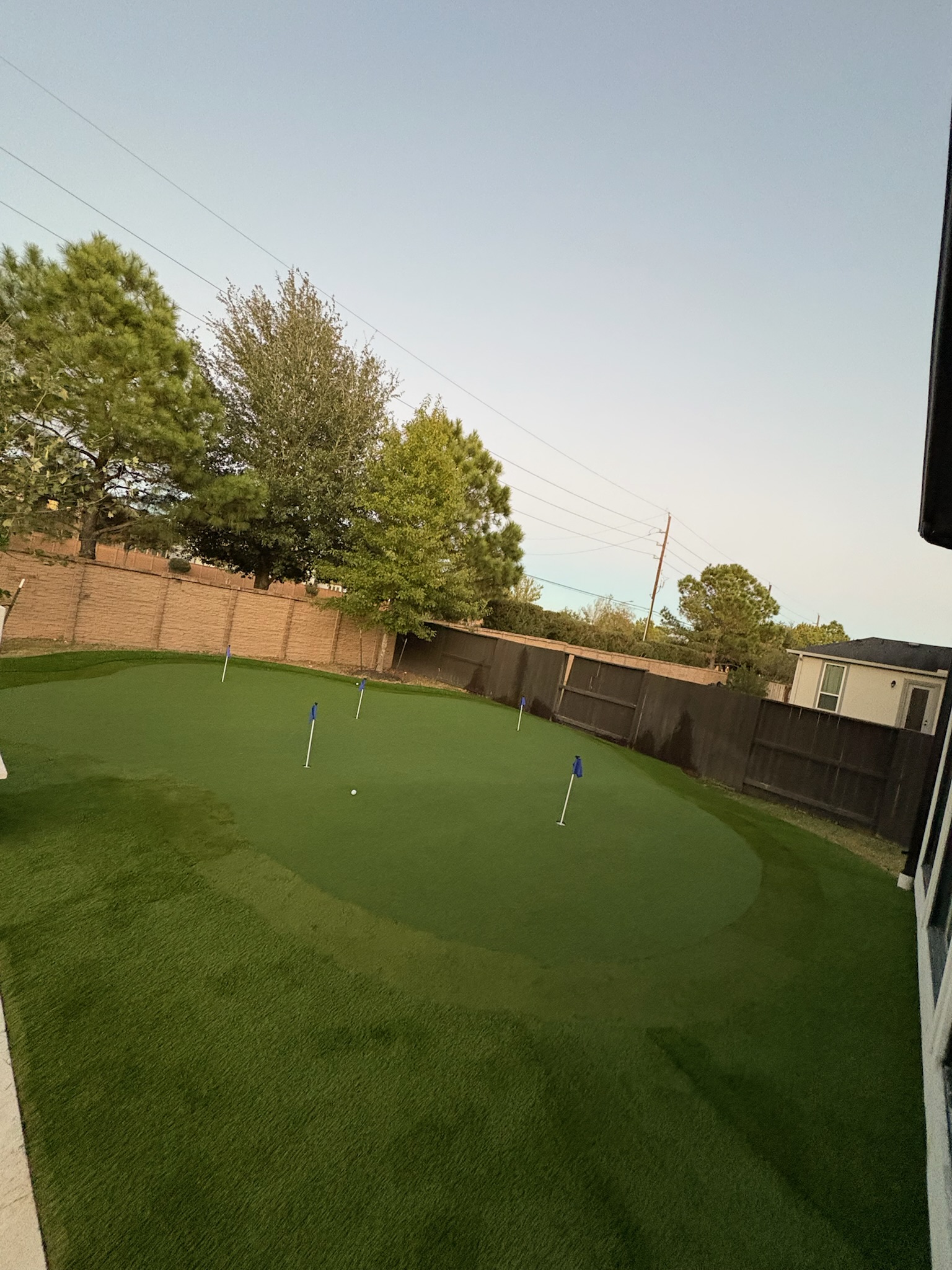
Our installation technicians unroll the Tour Greens turf panels, orient the grain direction for optimal ball roll, and secure the turf to the base using adhesives selected for their performance in high-heat, high-humidity conditions. Seaming is where craftsmanship matters most: our team hand-stitches each seam to create invisible joints that will not separate under the thermal expansion that Houston summers produce. Every seam is tested for smoothness by rolling balls across the joint at multiple angles to confirm zero deviation.
Step 6
Integrate the Fringe
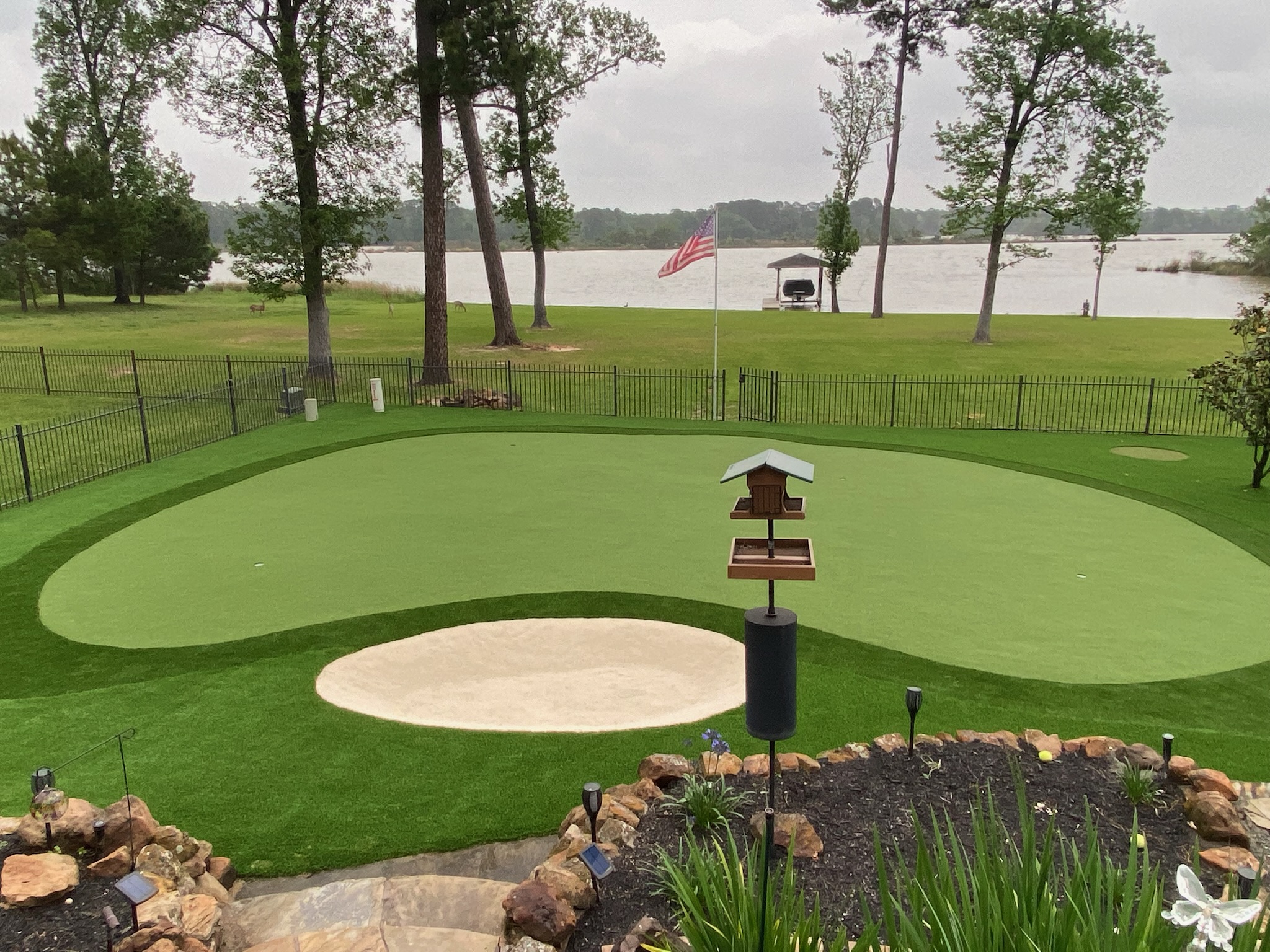
A putting green is only as realistic as its surroundings. Our team cuts and bonds a separate fringe turf product around the perimeter of the putting surface, creating the visual transition you see on a professional golf course. In Houston, where lush St. Augustine and Bermuda grass dominate the landscape, we match the fringe color and texture to blend naturally with your existing lawn. For properties with tropical landscaping common in the Bellaire and West University areas, we can integrate the fringe with existing palm, jasmine, and bougainvillea plantings.
Step 7
Apply RQS Proprietary Infill
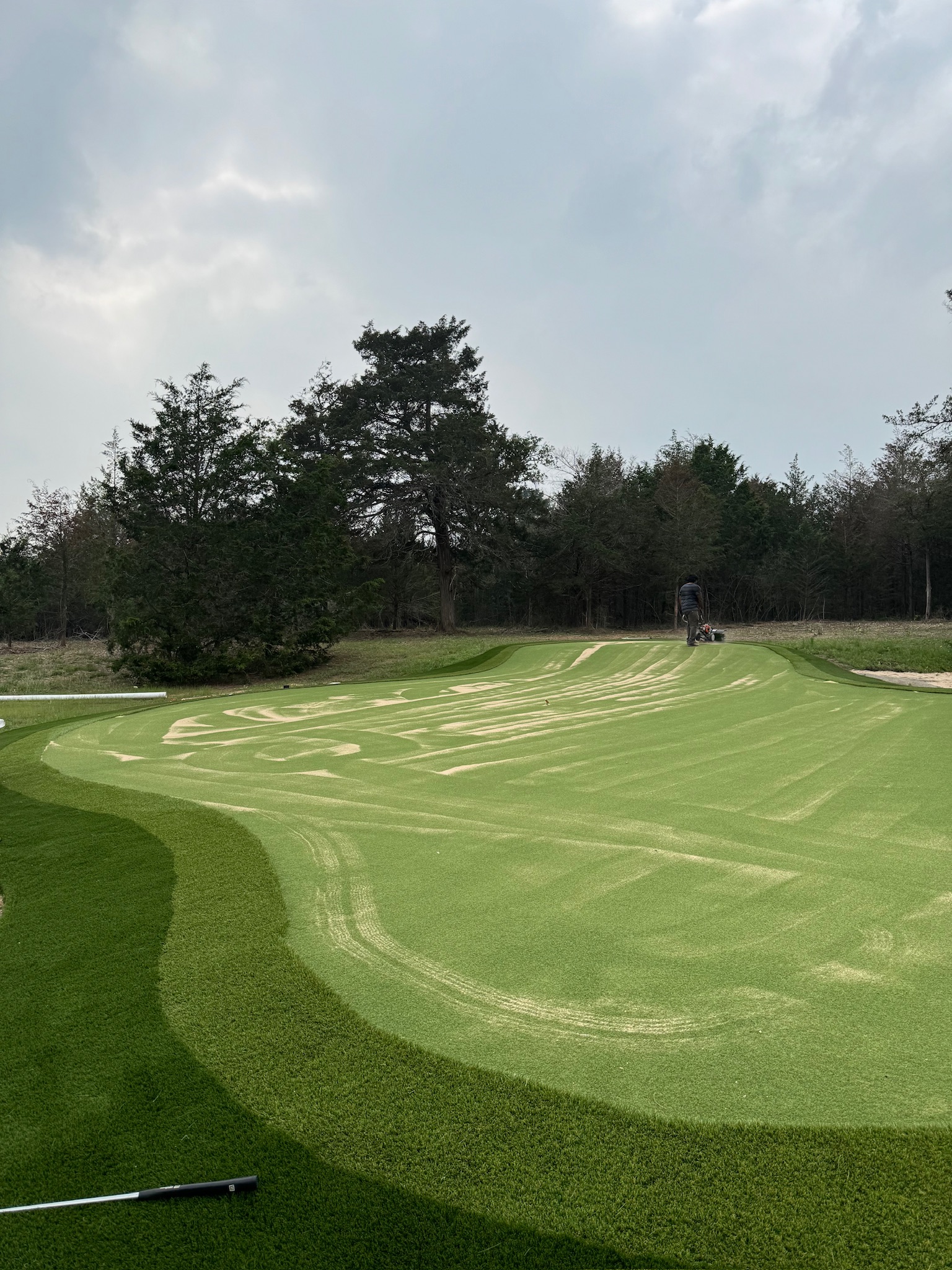
The RQS-2000 infill system is what gives a Tour Greens surface its distinctive soft feel and consistent ball behavior. We distribute the infill evenly across the turf surface using calibrated drop spreaders. In Houston, we pay special attention to infill depth because our heavy rains can displace poorly applied material. Our application rate and anchoring technique ensure the infill stays locked in place even after a Gulf Coast thunderstorm drops three inches of rain in 45 minutes.
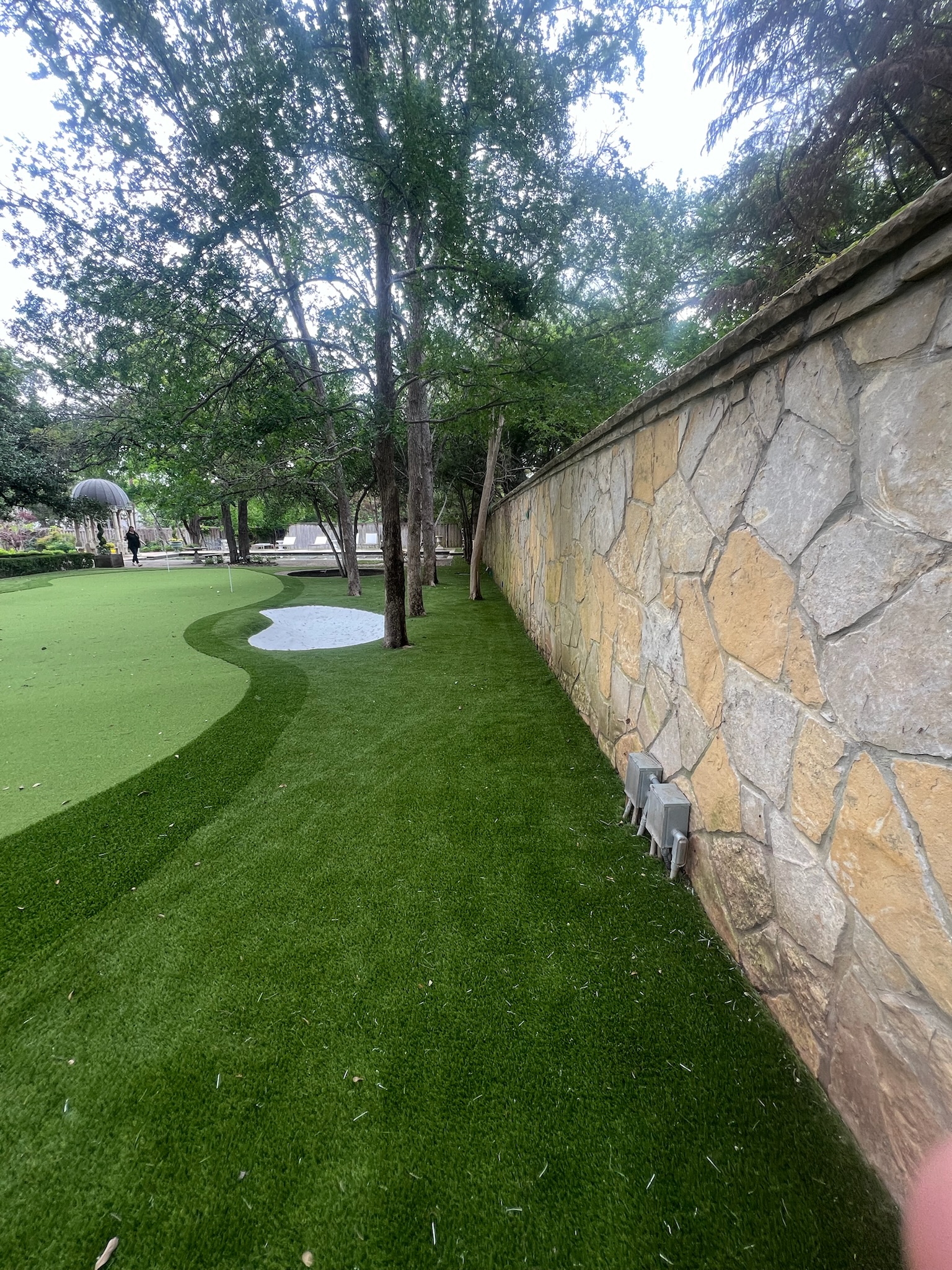
Step 8
Power-Broom the Fibers
After infill application, we use industrial power brooms to work the material down into the turf backing and encourage the synthetic fibers to stand upright. This step is critical for achieving the dense, velvety appearance of a well-maintained bent grass green. Houston's humidity actually works in our favor here -- the moisture in the air helps the fibers relax and bloom into their natural position more quickly than in arid climates, giving your green its final aesthetic within days rather than weeks.
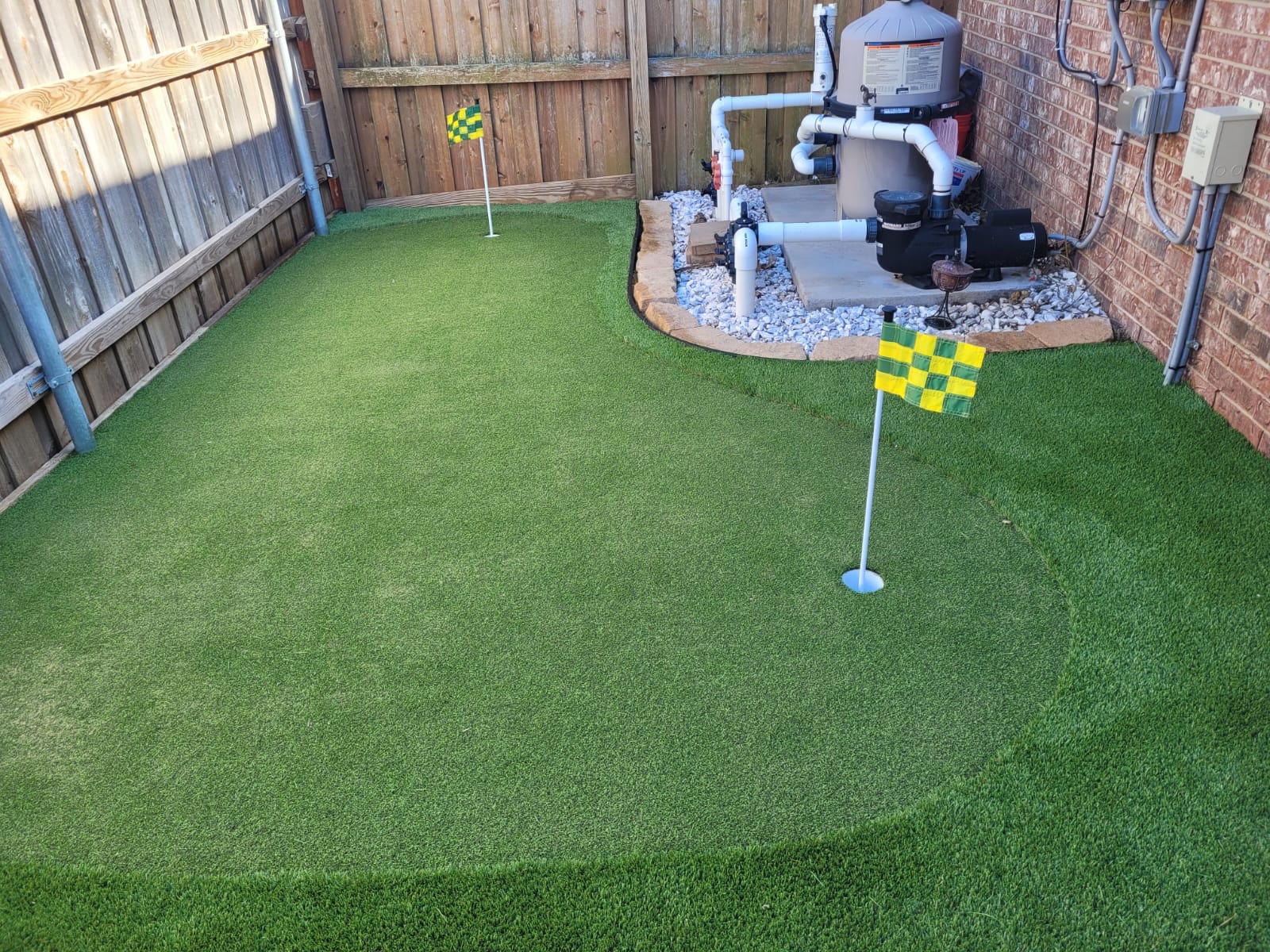
Step 9
Apply RQS Top Dressing
The finishing touch is our proprietary RQS Top Dressing -- a blend of colored acrylic-coated quartz granules that gives the surface its deep, rich luster. This top dressing settles between the fibers to create a tighter, faster playing surface. It also contributes to the green's UV reflectivity, helping to reduce surface temperature during those scorching Houston afternoons when the heat index can climb above 110 degrees. The result is a cooler, more comfortable surface for barefoot play or extended practice sessions.
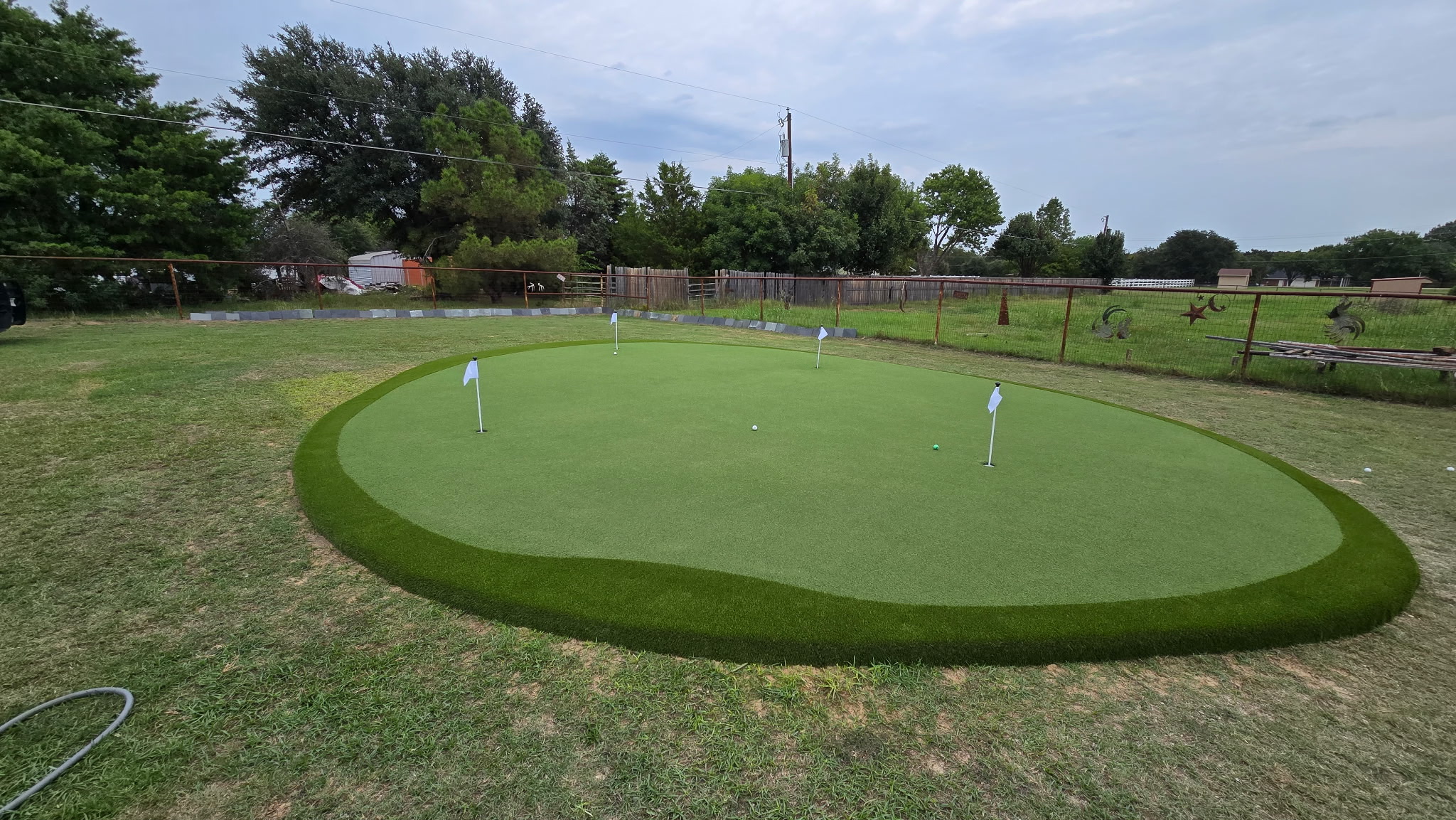
Step 10
Calibrate Green Speed
The final step is rolling the green to calibrate its stimp speed to your exact preference. Whether you want the moderate pace of a well-kept municipal course or the lightning-fast conditions found at Memorial Park Golf Course during tournament week, our team dials in the speed with precision rollers and repeated ball-roll testing across multiple sections of the green. We document the final stimp reading and leave you with a baseline measurement you can reference for future tune-ups.
Frequently Asked Questions About Putting Green Installation in Houston
How long does a typical putting green installation take in Houston?
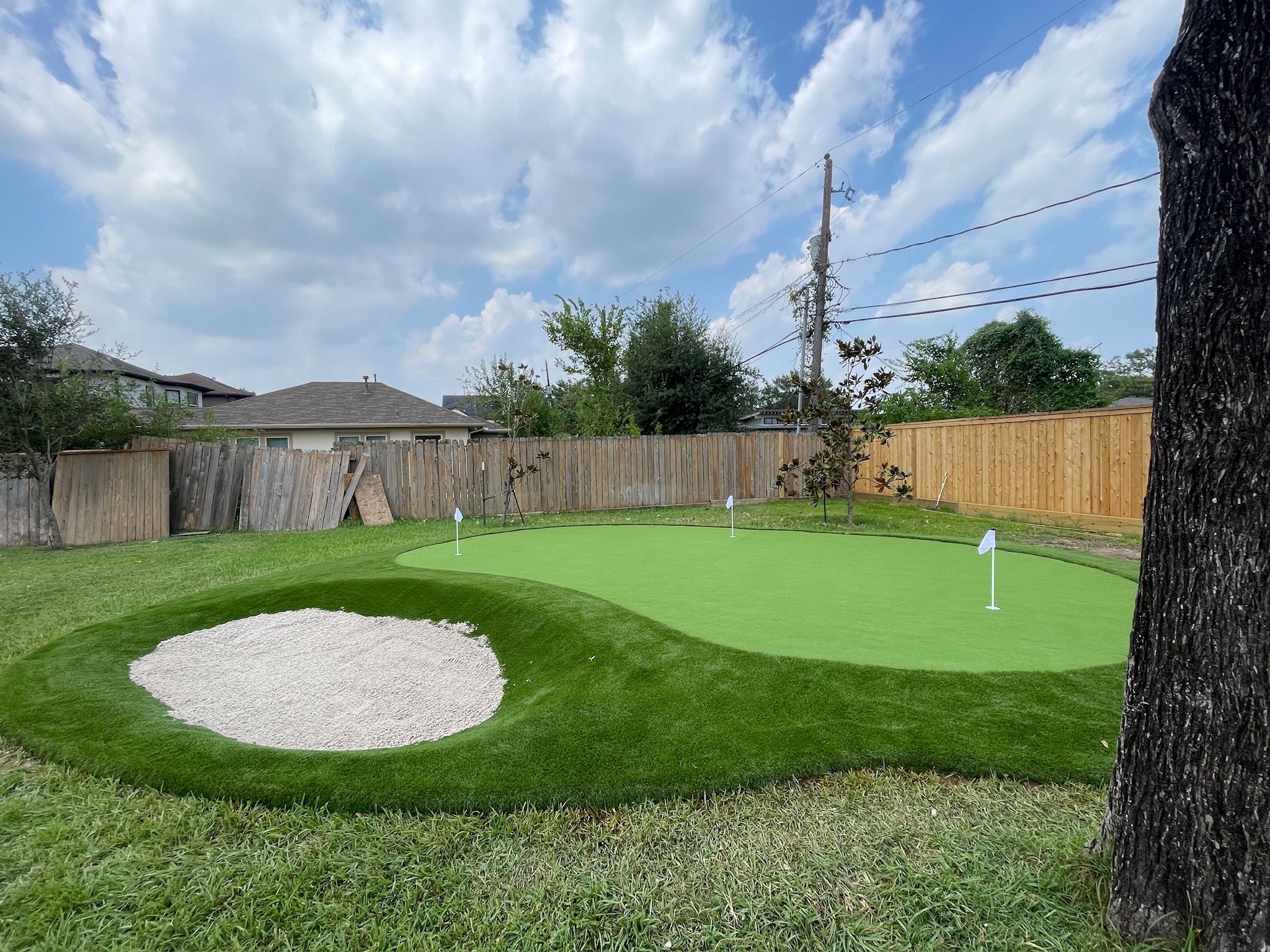
Most residential installations in the Greater Houston area take between five and ten working days, depending on the size of the green, the complexity of the contour design, and any drainage work required. Larger projects that include sand bunkers, chipping areas, and extensive fringe may take two to three weeks. Weather can also be a factor -- we monitor Gulf Coast forecasts closely and plan our schedule around Houston's frequent afternoon thunderstorms to protect the base and adhesives during critical curing periods.
Will Houston's heavy rains damage my synthetic putting green?
No. In fact, our installation process is specifically designed to handle Houston's intense rainfall. The engineered sub-base includes multiple drainage layers that channel water away from the surface and into perimeter drains or existing yard drainage systems. Tour Greens turf is also fully permeable, allowing water to pass through the surface at rates exceeding 30 inches per hour -- far faster than even the heaviest Gulf Coast downpours. After a storm, your green will typically be playable again within minutes, not hours.
How does Houston's clay soil affect the installation process?
Houston's Beaumont clay is one of the most expansive soil types in North America. It absorbs water and swells, then cracks and shrinks during dry spells. If a putting green is installed directly on top of this clay, the surface will eventually buckle and warp. Our process addresses this by excavating the clay to a specified depth and replacing it with a stable, free-draining aggregate base that is immune to the swell-shrink cycle. This is one of the most important differences between a Tour Greens Houston installation and a budget installation performed by a general landscaper.
Do I need a permit to install a putting green in Houston?
In most cases, a residential putting green does not require a building permit from the City of Houston. However, if your property is within a homeowners association, you will likely need HOA approval before beginning construction. Some deed-restricted neighborhoods, including many in Memorial, Tanglewood, and The Woodlands, have specific landscape modification guidelines. Our team is experienced in preparing HOA submission packages and can handle this process on your behalf.
How does Houston's humidity affect synthetic turf over time?
Sustained high humidity can promote mold and mildew growth on inferior synthetic turf products. Tour Greens turf is manufactured with antimicrobial additives integrated into the fiber and backing, and our RQS infill system resists moisture retention. With basic maintenance -- an occasional rinse with a garden hose and periodic brushing -- your green will stay clean and fresh-smelling even during the most humid stretches of summer. We also recommend an annual deep cleaning for Houston installations, which we can perform as part of our maintenance support program.
Can you install a putting green in a yard that floods occasionally?
Yes. Many Houston properties, particularly those near bayous, detention ponds, or low-lying areas inside the 100-year floodplain, experience occasional yard flooding. Our installation accounts for this by elevating the green base above the surrounding grade where possible and incorporating emergency drainage pathways that activate during high-water events. The turf itself is not damaged by submersion -- it drains completely once water levels recede. We have successfully installed greens in flood-prone neighborhoods across Harris, Fort Bend, and Montgomery counties.
What is the lifespan of a Tour Greens putting green in Houston's climate?
A properly installed and maintained Tour Greens putting green will deliver peak performance for 15 to 20 years in the Houston climate. The UV-stabilized fibers resist the intense Gulf Coast sun, and the engineered base maintains its structural integrity through wet and dry cycles. Infill may need periodic replenishment -- typically every two to three years -- and we recommend annual speed calibration to maintain your preferred stimp reading. Our team provides all of these services as part of our ongoing relationship with Houston-area clients.