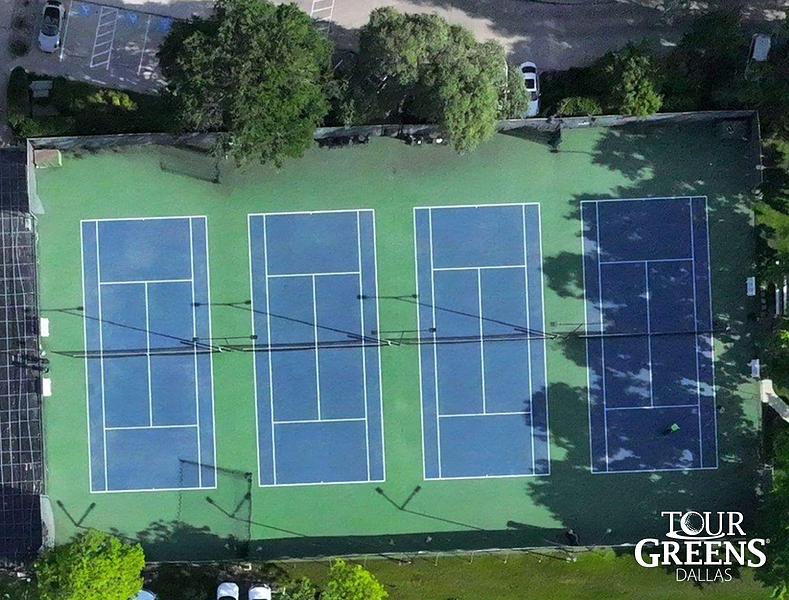
Hard Court Construction Engineered for Houston's Climate
Greater Houston's subtropical environment demands an approach to hard court construction that accounts for heavy rainfall, extreme humidity, and sustained summer heat that few other regions in the country experience. Tour Greens Houston engineers every court installation with drainage as the foundational priority, ensuring that playing surfaces shed water rapidly and return to game-ready condition within minutes of even the heaviest Gulf Coast downpour. Our hard courts deliver a permanent, all-weather playing surface that eliminates the scheduling headaches caused by soggy lawns, standing water on concrete patios, and the mold growth that plagues untreated outdoor surfaces in Harris County.
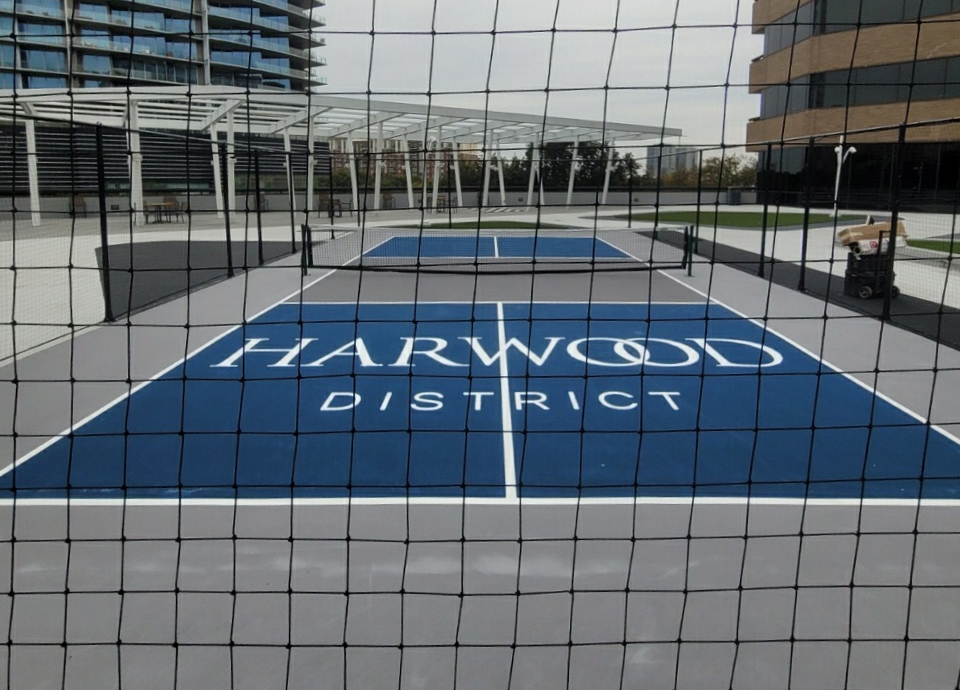
Working alongside our sister company Celebrity Courts, Tour Greens Houston holds certified installer credentials for both VersaCourt modular tile systems and SportMaster professional acrylic court coatings. This dual certification allows us to recommend and install the surfacing technology that best matches each client's property conditions, athletic goals, and budget parameters. From compact residential pickleball courts in River Oaks to sprawling multi-sport complexes at commercial recreation facilities in Katy, our Houston team handles every aspect of the build including site grading, concrete work, surface application, line striping, and accessory installation. Reach our project consultants at 713-538-2718 to schedule an on-site evaluation of your Houston-area property.
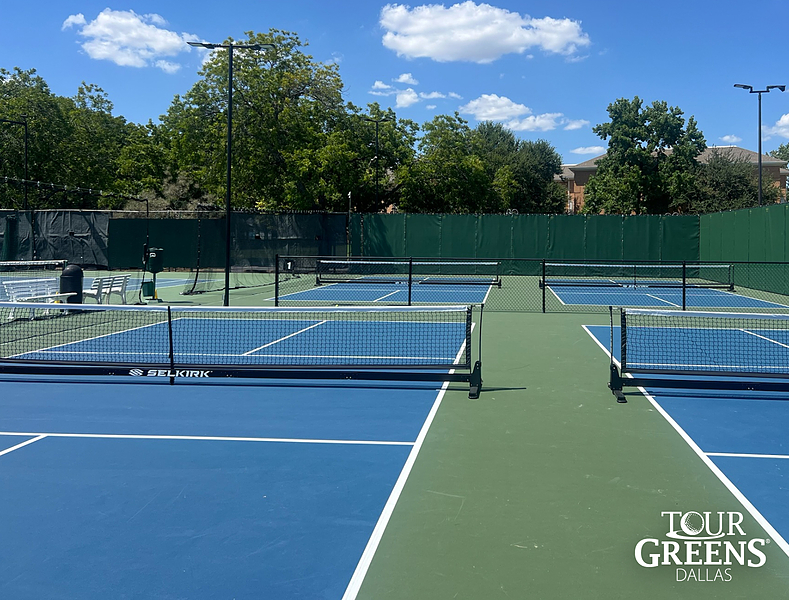
Surface Technology Built for Gulf Coast Conditions
Houston's combination of annual rainfall exceeding 50 inches and summer temperatures that routinely push past 95 degrees creates a uniquely demanding environment for outdoor court surfaces. Our VersaCourt modular tile installations address both challenges simultaneously. The elevated tile profile creates a continuous air gap between the playing surface and the concrete substrate, allowing water to flow freely beneath the tiles and exit through perimeter drainage channels. This design eliminates puddling and reduces the hydroplaning risk that makes flat acrylic surfaces treacherous during unexpected rain showers. The polypropylene tiles also dry faster than sealed acrylic because moisture evaporates from both the top surface and the underside cavity.
For Houston clients who prefer the traditional feel of a painted court, we apply SportMaster acrylic systems with enhanced anti-slip aggregate blended into the texture coat. This grit layer increases the coefficient of friction on the surface, giving players reliable footing even when residual morning dew or a light drizzle dampens the court. Every acrylic installation in the Houston market receives our premium UV-stable top coat formulation, which resists the accelerated color fading caused by Greater Houston's intense solar exposure and high UV index. We also install concrete overlay systems for commercial properties that need to refresh existing slabs without the cost of full demolition and replacement. Post-tensioned concrete bases are recommended for properties in areas of Harris County where expansive clay soils cause seasonal ground movement that can telegraph cracks through standard slabs.
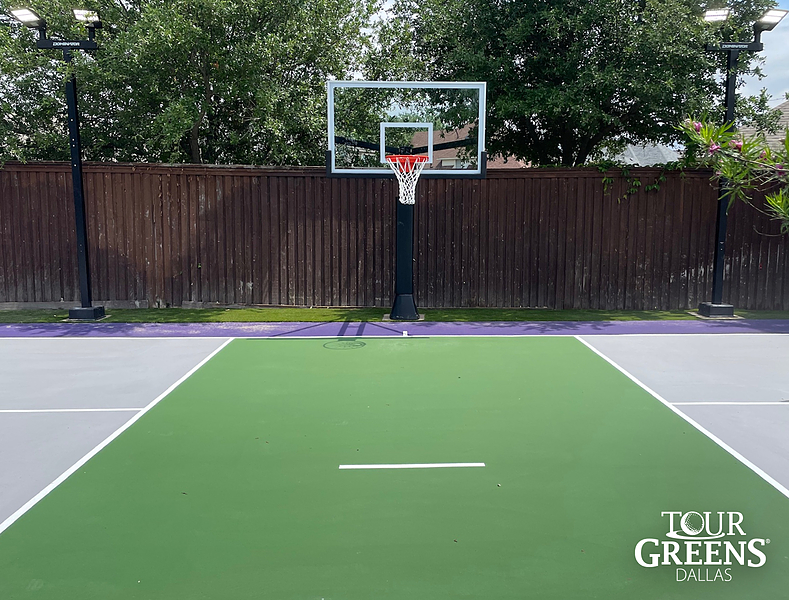
Sport Applications Across Greater Houston
Hard courts installed by Tour Greens Houston serve an exceptionally broad range of athletic disciplines. Basketball courts are our highest-volume residential product, with configurations ranging from driveway-adjacent half courts in Memorial-area homes to full-sized regulation courts on acreage properties in Cypress and Tomball. We source professional-grade goal systems with adjustable height mechanisms that allow the same court to serve young players learning the game and adults competing at regulation rim height.
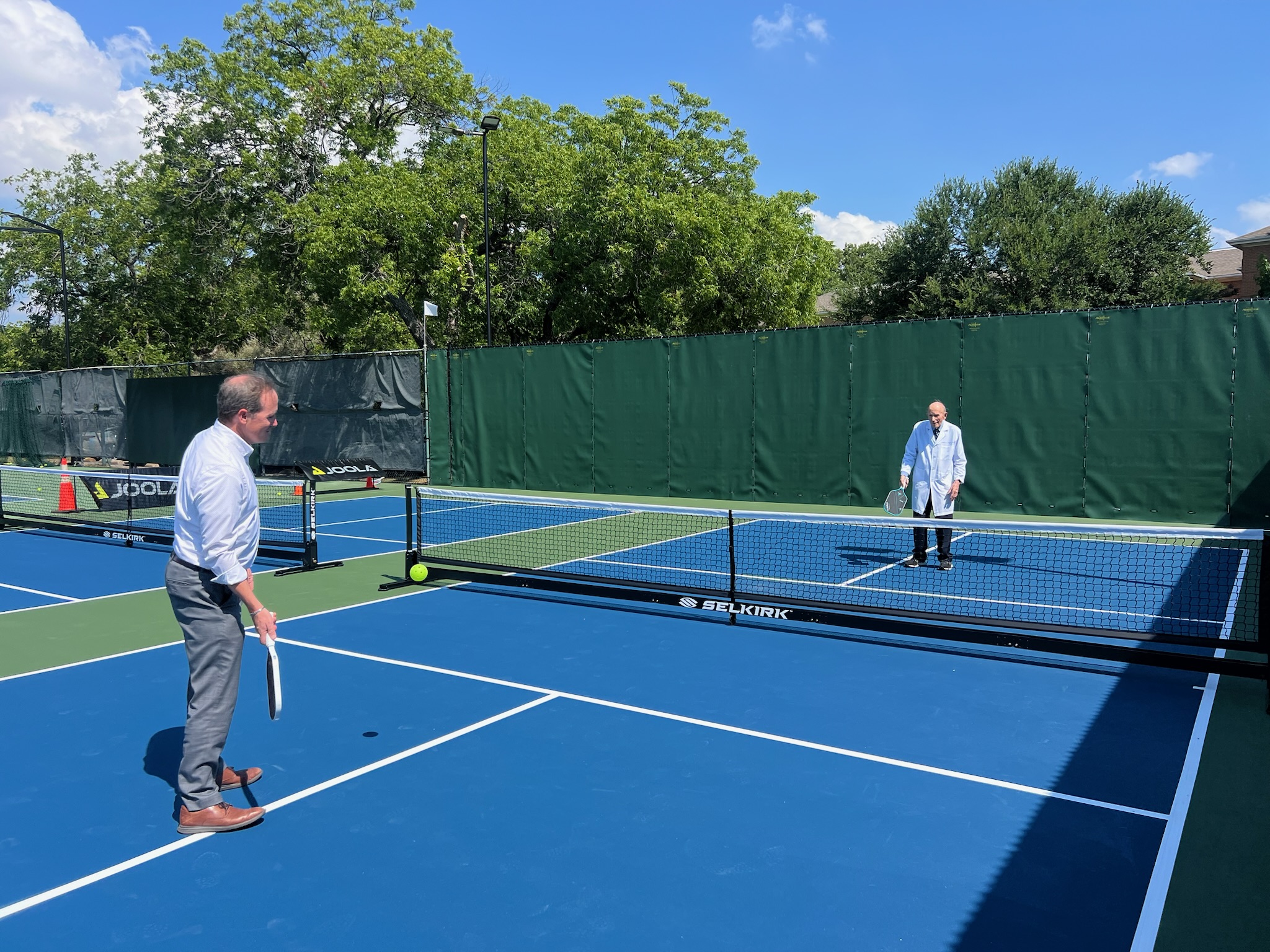
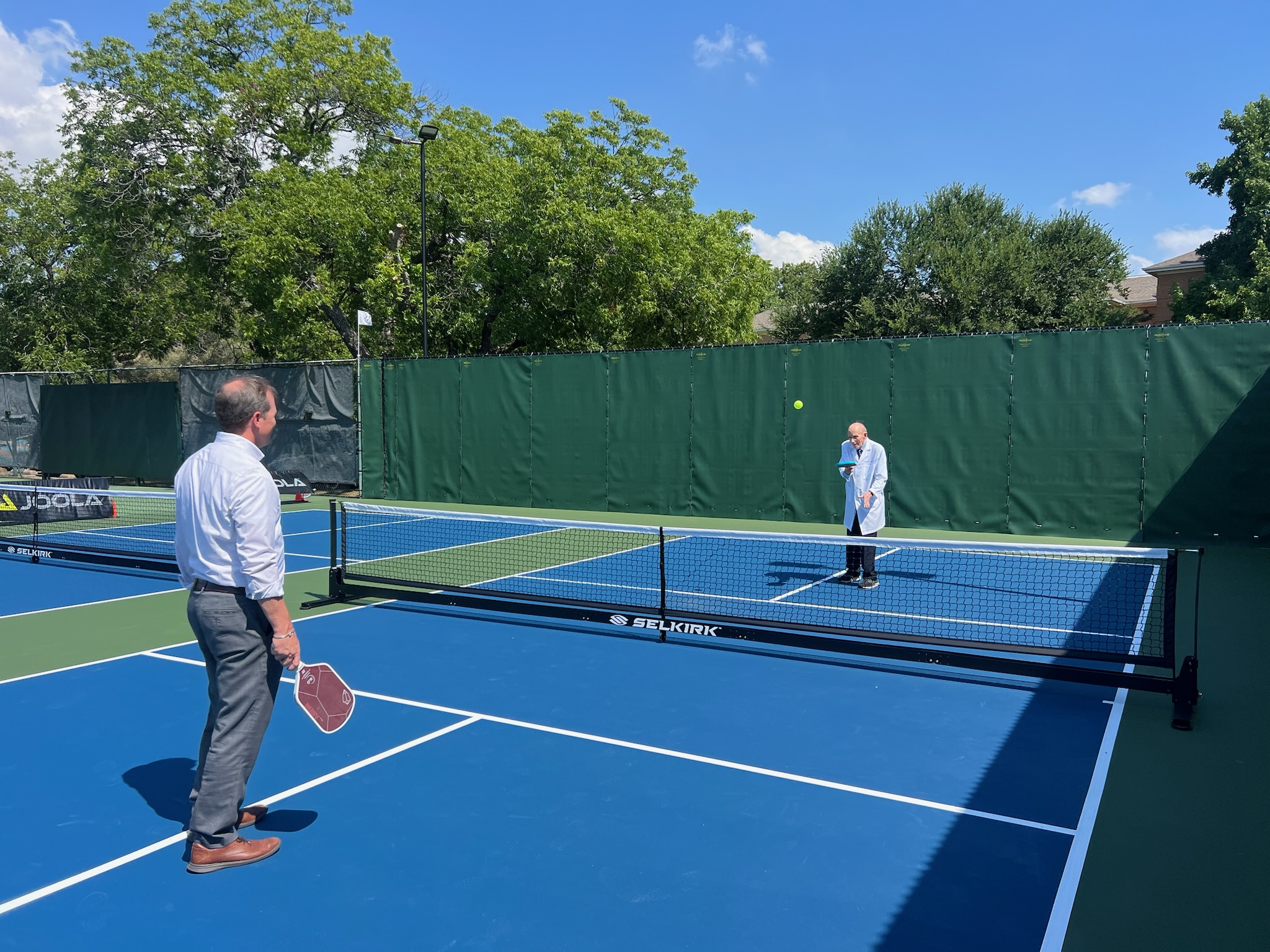
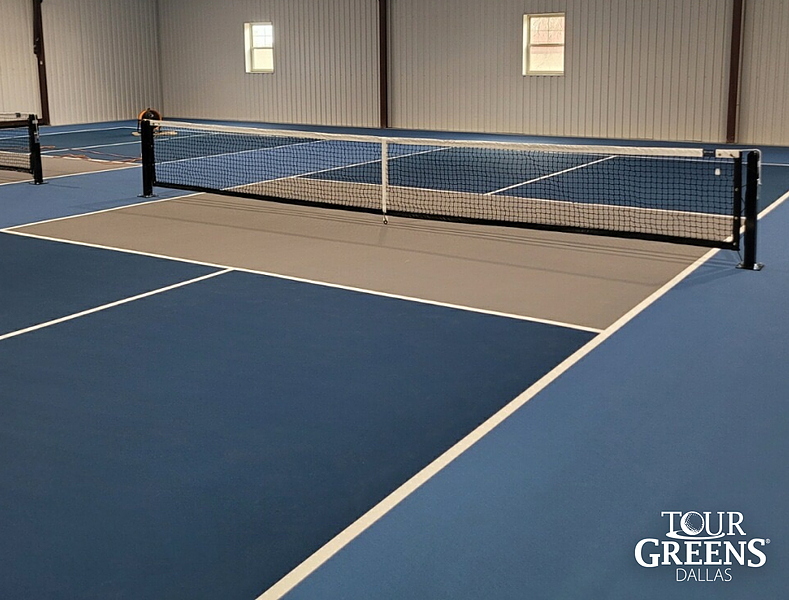
Pickleball installations have grown dramatically across Greater Houston, and our team builds courts for private backyards, homeowner association amenity centers, apartment complexes, and municipal parks throughout the metro. Each pickleball court follows USA Pickleball Association dimensional standards with precise net-post placement and correct non-volley zone markings. Tennis court construction adheres to USTA specifications, and our Houston clients can select standard acrylic or cushioned acrylic surfaces depending on their preference for speed of play and joint protection. We routinely design courts that combine basketball and pickleball lines in a shared footprint, and we have also installed futsal courts for Houston's vibrant soccer community and inline roller hockey rinks for youth league programs. Every sport layout is validated against governing body rulebooks before lines are applied to guarantee compliance.
Design & Customization for Houston Properties
Our Houston design process starts with a thorough site survey that evaluates existing grade elevations, soil composition, underground utility locations, and proximity to property lines and drainage easements. These factors directly influence court placement, orientation, and the engineering requirements for the concrete sub-base. Once site constraints are mapped, our designers produce detailed CAD drawings showing the proposed court footprint, color zones, game-line placement, net-post locations, and lighting pole positions. Houston clients review and revise these plans until every detail meets their expectations before construction mobilization begins.
Color selection for Houston hard courts balances aesthetics with thermal performance. We guide clients toward lighter shades for primary court areas since colors like ice blue, sandstone, and light gray can measure 10 to 15 degrees cooler underfoot than darker alternatives during peak Houston summer conditions. Accent colors in deeper tones such as forest green, burgundy, or navy are used for borders and key zones where temperature differential is less noticeable. Custom logos, school mascots, corporate branding, and family monograms can all be incorporated into the surface design. Court lighting for Houston installations typically uses marine-grade LED fixtures rated for the corrosive salt air and high humidity that characterize the Gulf Coast atmosphere, ensuring long fixture life with minimal maintenance.
Durability & Maintenance in Houston's Demanding Climate
Houston's weather subjects outdoor surfaces to a punishing combination of relentless UV radiation, torrential rain events, and atmospheric humidity that hovers above 80 percent for much of the year. Tour Greens Houston counters these forces with construction methods and materials specifically selected for Gulf Coast longevity. Every concrete slab we pour includes a minimum of four inches of 4,000-PSI mix with fiber-mesh reinforcement and a network of control joints that accommodate thermal expansion without producing random cracking. A carefully graded crushed-stone base beneath the slab provides positive drainage away from the court perimeter so that the subgrade never becomes saturated.
Routine maintenance for a Houston hard court is straightforward. We recommend clearing organic debris such as leaves and pollen with a blower after storms, as decaying plant matter left on the surface can promote algae and mildew growth in the humid environment. A diluted bleach or commercial court cleaner applied with a soft-bristle push broom once per quarter keeps biological staining in check. Pressure washing at low PSI is safe for both acrylic and tile surfaces and should be performed annually. Acrylic courts in the Houston area typically benefit from a professional recoating every four to six years, slightly more frequently than courts in drier climates due to the elevated moisture and UV exposure. VersaCourt tile surfaces require no recoating at all, and individual tiles can be swapped out if damaged by fallen branches or heavy furniture during tropical weather events.
Frequently Asked Questions About Houston Hard Courts
What drainage slope is required for a Houston hard court?
We engineer all Houston hard court slabs with a minimum slope of one percent in a single direction, which translates to roughly one inch of fall per eight feet of court length. This grade ensures that rainwater sheets off the playing surface and into a perimeter collection channel or French drain before it can accumulate. For larger courts or properties with challenging existing grades, we may increase the slope to 1.5 percent. VersaCourt tile installations can tolerate slightly flatter substrates because water drains through the tile joints, but we still recommend a minimum one-percent slope on the underlying concrete to direct sub-surface moisture toward an outlet.
How do UV-stable coatings protect Houston hard courts?
Houston ranks among the highest UV-index cities in the United States, and standard exterior paints can fade noticeably within two years of constant sun exposure. The SportMaster acrylic coatings we apply contain advanced UV-absorbing pigment technology that locks color depth into the coating matrix rather than allowing it to bleach out at the surface. Independent testing shows these formulations retain over 90 percent of their original color intensity after five years of full Texas sun exposure. This protection extends beyond aesthetics as UV degradation weakens the coating bond and can lead to flaking, peeling, and loss of surface texture if left unchecked.
Are Houston hard courts safe to play on when it rains?
Safety during wet conditions is one of the most common concerns among Houston homeowners, and we address it with surface selections specifically engineered for traction in moisture. VersaCourt tiles feature a micro-textured surface pattern combined with open drainage channels between each tile, so standing water never forms on the playing area. Acrylic court coatings receive a blended silica aggregate during the texture-coat phase that produces a gritty feel underfoot similar to fine sandpaper. This texture maintains grip even when a thin film of water is present. We advise against playing on any court surface during active heavy rainfall or thunderstorms for lightning safety reasons, but courts can be safely used during light rain and are typically playable within 15 to 20 minutes after a moderate storm passes.
Does Tour Greens Houston use heat-reflective technology on court surfaces?
Yes. All of our acrylic court installations in the Houston area use SportMaster's Cool Surface Technology line, which incorporates infrared-reflective pigments into the color coating. These specialized pigments reflect a portion of the solar infrared radiation that would otherwise be absorbed by the surface and re-emitted as heat. In field measurements conducted during Houston summers, Cool Surface coatings registered surface temperatures eight to twelve degrees Fahrenheit lower than standard acrylic coatings of identical color. This reduction makes barefoot play more comfortable and lowers the ambient air temperature in the immediate vicinity of the court, which improves player comfort during outdoor workouts.
Can Tour Greens Houston build hard courts for commercial recreation facilities?
Commercial court construction is a significant portion of our Houston business. We have completed projects for apartment community amenity centers, corporate campus recreation areas, church fellowship facilities, private athletic clubs, and municipal parks throughout Harris County and surrounding areas. Commercial installations require attention to ADA accessibility, higher traffic durability ratings, upgraded drainage infrastructure, and compliance with local permitting and zoning requirements. Our team manages the entire permitting process and works directly with property managers, architects, and general contractors to integrate court construction into larger site-improvement programs.
How often should a Houston hard court be resurfaced?
The resurfacing interval depends on the surface type, usage volume, and exposure conditions. Acrylic-coated courts in residential settings with moderate use and partial shade typically last five to seven years before needing a fresh color coat. Courts in full sun with heavy daily use, such as those at community recreation centers, may benefit from recoating every three to five years. The recoating process involves cleaning the surface, repairing any hairline cracks, and applying two fresh coats of colored acrylic over the existing surface. VersaCourt tile systems do not require recoating and can last 15 to 20 years under normal use before tile replacement becomes necessary.
Our Work