
Putting Green Installation in Magnolia, TX: Rural Acreage Meets Professional-Grade Turf Design
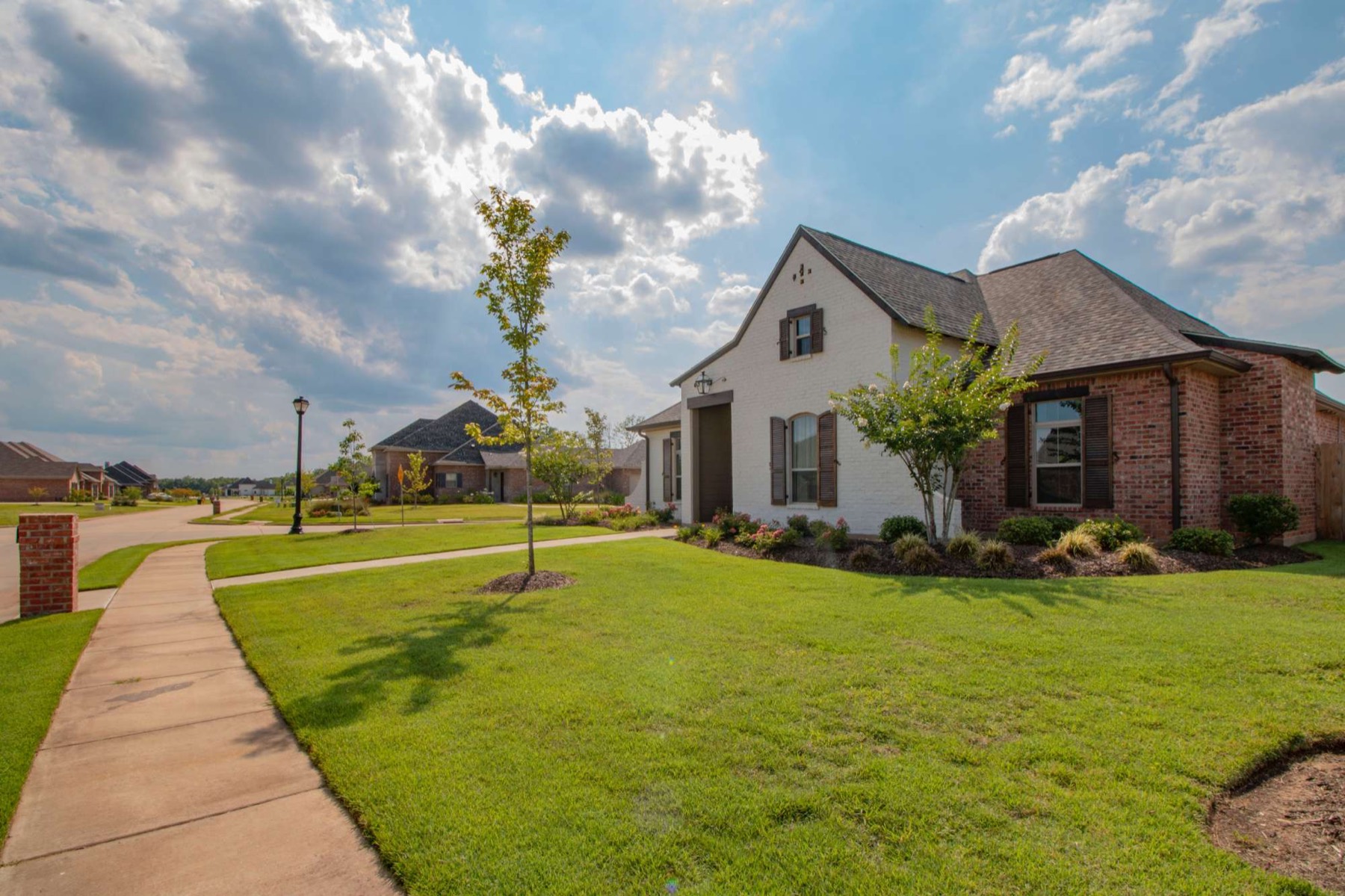
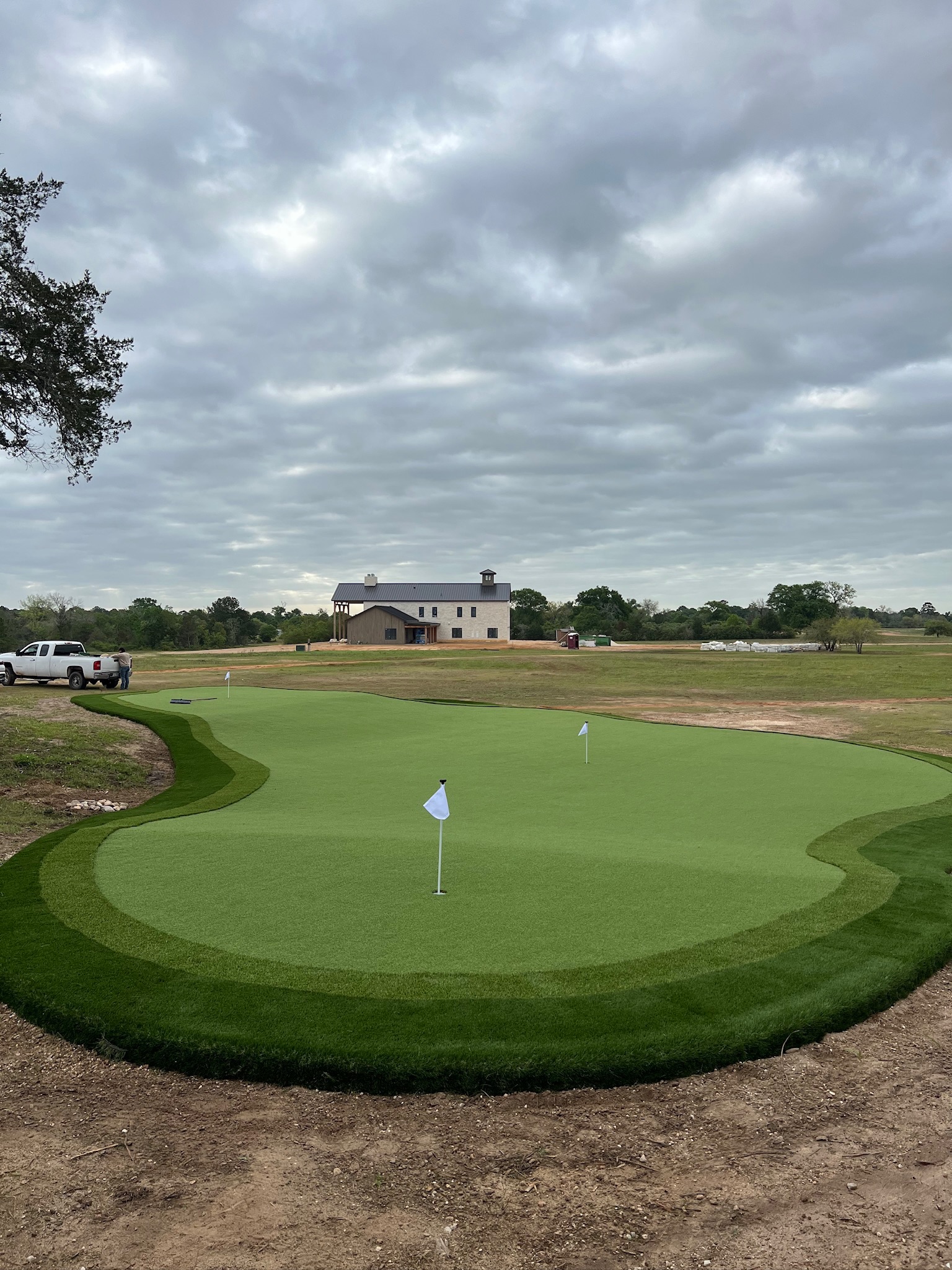
Magnolia blends small-town Texas character with the spacious acreage properties that draw families northwest of Houston. Located in Montgomery County along the FM 1488 and FM 2978 corridors, Magnolia offers something increasingly rare in Greater Houston: room to spread out. Many homeowners here sit on one-acre lots or larger, with mature pine and oak canopies, rolling terrain, and the kind of open backyard space that is perfectly suited for ambitious putting green projects. Tour Greens Houston brings professional-grade synthetic turf installation to Magnolia properties, building systems that transform these generous rural lots into personal golf retreats.
What sets Magnolia apart from more urban Houston neighborhoods is the landscape itself. The sandy loam and clay mix soils found across Montgomery County drain differently than the heavy Gumbo clay closer to the coast, and the gentle elevation changes along Spring Creek and Cypress Creek tributaries create natural terrain variation that can be incorporated into putting green contours. We understand how to work with Magnolia's land rather than against it, using existing slopes to create authentic break lines and natural-looking green complexes that feel like they belong in the piney woods setting. Whether your property is near Unity Park, along the Magnolia Parkway corridor, or tucked into one of the rural estates off FM 1774, Tour Greens Houston delivers installations calibrated for this specific landscape. Call 713-538-2718 to start your project.
Designing for Magnolia's Piney Woods Terrain and Sandy Soils
Magnolia properties present a distinct set of site conditions compared to typical Houston-area installations. The soil composition shifts from heavy coastal clay to a sandier mix with pine needle duff and organic matter as you move into Montgomery County's wooded areas. While this soil drains better than Houston clay, it can also shift and settle unevenly if not properly compacted during base preparation. Tour Greens Houston adjusts our engineering approach for every Magnolia project based on the specific soil conditions found at your property.
Tree canopy is another consideration unique to Magnolia installations. Many properties feature mature loblolly pines and live oaks that cast significant shade patterns throughout the day. We map these shade patterns during the design phase to position the putting green where it receives optimal light while accounting for pine needle drop, root systems that may affect base stability, and the natural micro-terrain created by decades of tree growth. Our turf products are selected to maintain consistent color and performance in both full sun and partial shade conditions common in Magnolia's wooded lots.
- Soil-specific base construction calibrated for Montgomery County's sand-clay mix
- Root barrier installation to protect sub-base integrity near mature trees
- Shade-tolerant turf fiber selection for properties under pine and oak canopy
- Terrain-integrated contour designs that use natural slopes for authentic ball roll
What We Build on Magnolia's Spacious Properties
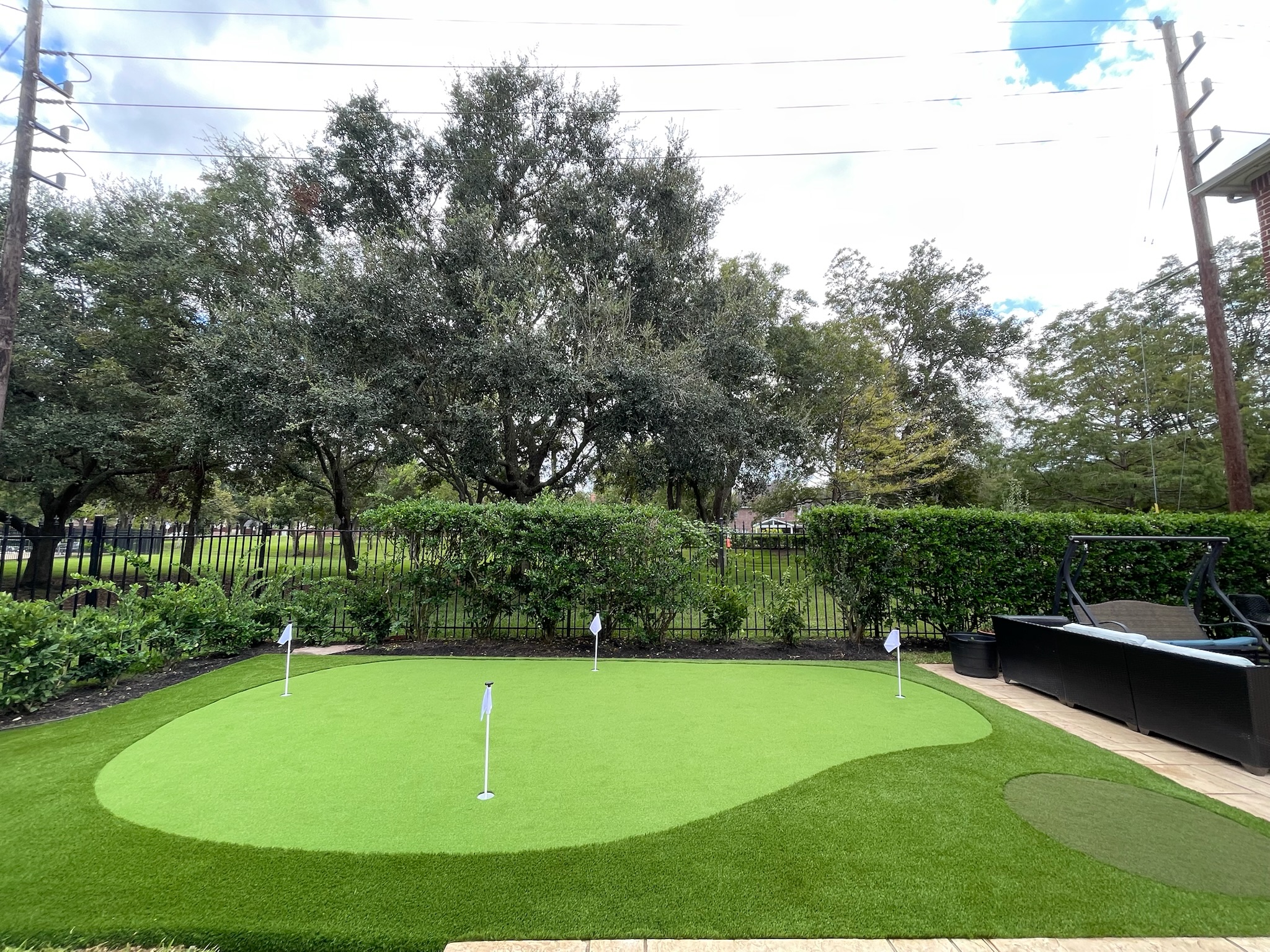
The larger lot sizes in Magnolia allow for project scopes that would be impossible in more compact Houston suburbs. Tour Greens Houston has installed multi-hole putting courses, full short-game practice facilities with chipping and pitching zones, and complete backyard golf complexes on Magnolia acreage properties. We also work with homeowners who want to combine golf amenities with pet areas, play surfaces for children, and low-maintenance landscape conversions that reclaim time spent mowing large rural lots.
- Multi-hole putting courses spanning 1,500 square feet or more on acreage properties
- Full short-game practice complexes with chipping greens, pitching targets, and fairway-cut approach areas
- Pet turf zones with antimicrobial infill, ideal for the multiple dogs common on Magnolia's larger properties
- Partial or full-yard artificial grass conversions that eliminate hours of weekly mowing on oversized lots
- Golf simulator room turf and tee line surfaces for dedicated workshop or barn practice spaces
- Bocce courts, putting courses, and game surfaces built into the natural landscape contours
Our Installation Process for Magnolia Properties
Magnolia projects often involve unique access considerations. Properties on larger lots may require equipment to travel longer distances from the street, and wooded sites may need selective clearing to create the project footprint. Tour Greens Houston handles all of this during the planning phase. Our initial site consultation includes a thorough assessment of equipment access routes, tree protection requirements, utility locations, and any septic system setbacks that could affect the installation footprint. We coordinate with your landscaper or arborist when tree work is needed adjacent to the project area.
Once the site plan is finalized and approved, our crew begins with careful excavation that preserves surrounding landscape features. On Magnolia's sandy soils, we typically install a geotextile separation fabric before building the aggregate base to prevent soil migration into the drainage layer. The base is constructed in compacted lifts, with each layer tested for stability before the next is applied. For properties with natural slope, we incorporate the existing grade changes into the green's contour design rather than fighting them with excessive fill or cut.
Turf installation follows the base work, with each panel precision-cut to match the design template. Seams are heat-bonded for invisible joints, and the turf is secured with perimeter edging that creates clean transitions to surrounding mulch, flagstone, or natural grass areas. Infill is applied in measured quantities and brushed into the fiber to achieve the specified green speed. We install regulation cups, fiberglass flagsticks, and any custom accessories before conducting a final walkthrough where we cover brushing technique, seasonal infill maintenance, and pine needle removal best practices specific to Magnolia's wooded setting.
Magnolia Areas and Neighborhoods We Serve
- FM 1488 corridor and Magnolia Parkway
- FM 2978 and Nichols Sawmill Road area
- Unity Park and downtown Magnolia vicinity
- FM 1774 rural estates and acreage properties
- Decker Prairie and Todd Mission area
- Country Lake Estates and surrounding communities
Why Magnolia Homeowners Trust Tour Greens Houston
- Experience building on large acreage with complex access and terrain
- Soil-specific engineering for Montgomery County's sand-clay conditions
- Designs that integrate with wooded landscapes and natural topography
- Capability to build multi-hole putting courses and full short-game complexes
- Root barrier and tree protection protocols for mature piney woods properties
- Complete project management from clearing through final walkthrough
FAQs: Putting Greens and Synthetic Turf in Magnolia, TX
Can you build a putting green around existing trees on my Magnolia property?
Yes. We frequently design greens that incorporate mature trees as natural features rather than obstacles. Root barriers are installed to protect the turf base from root intrusion, and we leave appropriate clearance around trunks to ensure tree health. The green's contour can be designed to flow around tree placements, creating a more interesting and natural-looking installation that takes advantage of Magnolia's wooded character.
How do you handle pine needle buildup on the putting surface?
Pine needles are a fact of life on Magnolia properties with mature loblolly or shortleaf pines. We recommend regular removal using a leaf blower on a low setting, which clears debris without disturbing the infill. The turf surface is designed with sufficient drainage capacity to handle needle accumulation between cleanings, and the fiber structure prevents needles from embedding into the surface the way they do in natural grass.
Is there enough space on my lot for a putting green and a pet area?
Magnolia's generous lot sizes almost always accommodate multiple turf zones. A typical project might include a 600-square-foot putting green, a 400-square-foot pet turf area, and transitional landscape turf connecting both zones, all within a footprint that leaves plenty of natural yard space. During the site visit, we map out the optimal placement for each zone based on your property's sun exposure, drainage patterns, and proximity to the house.
What about septic system setbacks on Magnolia's rural properties?
Many Magnolia homes use septic systems rather than municipal sewer connections. We identify septic tank and drain field locations during the initial site assessment and design the installation footprint to maintain required setbacks. Our base construction does not interfere with drain field function, and we route our drainage systems away from septic infrastructure.
How do the sandy soils in Magnolia affect the installation?
Magnolia's sandier soils actually provide better natural drainage than the heavy clay found closer to the coast, but they can shift and settle if not properly prepared. We use geotextile fabric between the native soil and aggregate base to prevent sand migration, and our compaction process is adjusted for the soil's lower cohesion. The result is a stable, long-lasting base that takes advantage of the natural drainage characteristics of Montgomery County soils.
Do you install putting greens for Magnolia properties still under construction?
Yes. We coordinate with builders and general contractors on new construction projects throughout Magnolia. Installing the putting green during the landscaping phase of a new build allows us to integrate drainage systems, grading, and hardscape transitions from the beginning rather than retrofitting them later. We can work from builder site plans and coordinate our schedule with other trades on the project.
What is the maintenance schedule for a putting green in Magnolia's climate?
Magnolia's climate requires minimal maintenance beyond monthly brushing, periodic infill replenishment, and regular debris removal. The slightly sandier soil conditions mean less mud splash during rainstorms compared to clay-soil areas, and good airflow on larger lots helps the surface dry quickly. We recommend a light hosing during peak summer months if surface temperatures become uncomfortable, though Magnolia's tree cover often provides enough natural shade to moderate afternoon heat.